South Africa were struggling at 64 for 4 before her knock lifted the team to a competitive 136 for 6
from Pakistan news from ESPN Cricinfo.com https://ift.tt/2TcbovG
Original Content From : https://ift.tt/Ti8aBD

This Blog is created to share Technical Solutions for public interest. The Content is related with IT solutions, SEO tips, Online Earning, online marketing, website developement, CSS, java, C++, python, C sharp Languages.
Saturday, February 29, 2020
TECH Solutions - How To Earn Money Online From Mobile in Pakistan || Payment Proof
How To Earn Money Online From Mobile in Pakistan || Payment Proof
Hi Friends: This is my Blog Technical Solutions created to share videos and content of technical solutions with the world. At this blog you can find videos about Free Search Engine Optimization Course, how to develope Android Applications and What is Computer hardware and software, you would be able to increse your channel views, or boost your website. so guys keep visiting my blog for learning technical things. Thank You!
Hi Friends: This is my Blog Technical Solutions created to share videos and content of technical solutions with the world. At this blog you can find videos about Free Search Engine Optimization Course, how to develope Android Applications and What is Computer hardware and software, you would be able to increse your channel views, or boost your website. so guys keep visiting my blog for learning technical things. Thank You!
TECH Solutions - Multiverse virtual worlds will be healthier for society than our current social networks
The basis of the classic James Bond film “Tomorrow Never Dies” is an evil media mogul who instigates war between the U.K. and China because it will be great for TV ratings. There’s been a wake-up call recently that our most popular social networks have been indirectly designed to divide populations into enemy camps and reward sensational content, but without the personal responsibility of Bond’s nemesis because they’re algorithmically driven.
(This is part five of a seven-part series about virtual worlds.)
The rise of “multiverse” virtual words as the next social frontier offers hope to one of the biggest crises facing democratic societies right now. Because the dominant social media platforms (in Western countries at least) monetize through advertising, these platforms reward sensational content that results in the most clicks and shares. Oversimplified, exaggerated claims intended to shock users scrolling past are best practices for individuals, media brands and marketing departments alike, and social platforms intentionally steer users toward more extreme content in order to captivate them for longer.
Our impending cultural shift to socializing equally as often through virtual worlds could help rescue us from this constant conflict of interest between what we recognize as healthy interactions with others and how these social apps incentivize us to behave.
Virtual worlds can have advertisements within them, but the dominant monetization strategies in MMOs are upfront purchase of games and in-game transactions. Any virtual world that gains enough adoption to compete as a social hub for mainstream society will need to be free-to-play and will earn more money through in-world transactions than from ads.

from Social – TechCrunch https://ift.tt/3advCe0
Original Content From: https://techcrunch.com
Technical Solutions - Tech Talks #1065 - Realme 6 Pro First Look, Facebook 3D Photo, Bionic Eyes, Ironman Smartwatch
Tech Talks #1065 - Realme 6 Pro First Look, Facebook 3D Photo, Bionic Eyes, Ironman Smartwatch
TG Deals@ https://tg.deals/ New Channel: https://goo.gl/Jz6p5K Namaskaar Dosto, Tech Talks ke is Episode mein maine aapse kuch interesting Tech News Share ki hai jaise Realme 6 Pro First Look, Facebook 3D Photo, Bionic Eyes, Ironman Smartwatch aur bahut kuch. Mujhe umeed hai ki yeh video aapko pasand aayega. Share, Support, Subscribe!!! Subscribe: http://bit.ly/1Wfsvt4 Android App: https://ift.tt/2mrm9Gy Youtube: http://www.youtube.com/c/TechnicalGuruji Twitter: http://www.twitter.com/technicalguruji Facebook: https://ift.tt/1Pi5LDP Facebook Myself: https://goo.gl/zUfbUU Instagram: https://ift.tt/1OW2vue Google Plus: https://ift.tt/1Pi5LDS Website: https://ift.tt/2mcM6KV Merchandise: https://ift.tt/2lN4Vbu About : Technical Guruji is a YouTube Channel, where you will find technological videos in Hindi, New Video is Posted Everyday :)
TG Deals@ https://tg.deals/ New Channel: https://goo.gl/Jz6p5K Namaskaar Dosto, Tech Talks ke is Episode mein maine aapse kuch interesting Tech News Share ki hai jaise Realme 6 Pro First Look, Facebook 3D Photo, Bionic Eyes, Ironman Smartwatch aur bahut kuch. Mujhe umeed hai ki yeh video aapko pasand aayega. Share, Support, Subscribe!!! Subscribe: http://bit.ly/1Wfsvt4 Android App: https://ift.tt/2mrm9Gy Youtube: http://www.youtube.com/c/TechnicalGuruji Twitter: http://www.twitter.com/technicalguruji Facebook: https://ift.tt/1Pi5LDP Facebook Myself: https://goo.gl/zUfbUU Instagram: https://ift.tt/1OW2vue Google Plus: https://ift.tt/1Pi5LDS Website: https://ift.tt/2mcM6KV Merchandise: https://ift.tt/2lN4Vbu About : Technical Guruji is a YouTube Channel, where you will find technological videos in Hindi, New Video is Posted Everyday :)
This Week in Apps: Coronavirus impacts app stores, Facebook sues mobile SDK maker, Apple kicks out a cloud gaming app
Welcome back to This Week in Apps, the Extra Crunch series that recaps the latest OS news, the applications they support and the money that flows through it all.
The app industry is as hot as ever, with a record 204 billion downloads in 2019 and $120 billion in consumer spending in 2019, according to App Annie’s recently released “State of Mobile” annual report. People are now spending 3 hours and 40 minutes per day using apps, rivaling TV. Apps aren’t just a way to pass idle hours — they’re a big business. In 2019, mobile-first companies had a combined $544 billion valuation, 6.5x higher than those without a mobile focus.
In this Extra Crunch series, we help you keep up with the latest news from the world of apps, delivered on a weekly basis.
This week, we’ll look at the coronavirus outbreak’s impact on the App Store, China’s demand for App Store removals — and soon-to-be-removals, it seems. We’re also talking about Facebook’s lawsuit over a data-grabbing SDK, Tinder’s new video series, the TSA ban on TikTok, Instagram’s explanation for its lack of an iPad app and how Democratic presidential primary candidates are performing on mobile and social, among other things.
Headlines
Coronavirus concerns send Chinese ride-hailing apps crashing, games surging


from Mobile – TechCrunch https://ift.tt/39hge0k
ORIGINAL CONTENT FROM: https://techcrunch.com/
Tech Solutions -Multan Sultans bat against Quetta Gladiators as top spot beckons
For the first time in the PSL this season, a side elected to bat first
from Pakistan news from ESPN Cricinfo.com https://ift.tt/32MQ1nX
Original Content From : https://ift.tt/Ti8aBD
from Pakistan news from ESPN Cricinfo.com https://ift.tt/32MQ1nX
Original Content From : https://ift.tt/Ti8aBD
Friday, February 28, 2020
Technical Solutions - Exclusive Realme 6 Pro First Look - Realme TV Giveaway - Realme Price Rising??? Ft. Madhav Sheth🔥🔥🔥
Exclusive Realme 6 Pro First Look - Realme TV Giveaway - Realme Price Rising??? Ft. Madhav Sheth🔥🔥🔥
Namaskaar Dosto, yeh ek bahut hi khaas video hai jaha maine baat ki Realme India CEO, Mr. Madhav Sheth se aur discus kiya Realme Plans ke baare mein, saath mein hi ek first look bhi share kiya Realme 6 Pro Smartphone ka aur baat ki Realme TV ke baare mein. Maine aapko box bhi dikhaya hai Realme 6 aur Realme 6 Pro Smartphone ka, ek design ke saath. Saath mein hi ek giveaway bhi hai Realme TV ka, aap sabhi viewers ke liye. Mujhe umeed hai ki aapko Realme ke baare mein yeh video pasand aayegi. Share, Support, Subscribe!!! Subscribe: http://bit.ly/1Wfsvt4 Android App: https://ift.tt/2mrm9Gy Youtube: http://www.youtube.com/c/TechnicalGuruji Twitter: http://www.twitter.com/technicalguruji Facebook: https://ift.tt/1Pi5LDP Facebook Myself: https://goo.gl/zUfbUU Instagram: https://ift.tt/1OW2vue Google Plus: https://ift.tt/1Pi5LDS Website: https://ift.tt/2mcM6KV Merchandise: https://ift.tt/2lN4Vbu About : Technical Guruji is a YouTube Channel, where you will find technological videos in Hindi, New Video is Posted Everyday :)
Namaskaar Dosto, yeh ek bahut hi khaas video hai jaha maine baat ki Realme India CEO, Mr. Madhav Sheth se aur discus kiya Realme Plans ke baare mein, saath mein hi ek first look bhi share kiya Realme 6 Pro Smartphone ka aur baat ki Realme TV ke baare mein. Maine aapko box bhi dikhaya hai Realme 6 aur Realme 6 Pro Smartphone ka, ek design ke saath. Saath mein hi ek giveaway bhi hai Realme TV ka, aap sabhi viewers ke liye. Mujhe umeed hai ki aapko Realme ke baare mein yeh video pasand aayegi. Share, Support, Subscribe!!! Subscribe: http://bit.ly/1Wfsvt4 Android App: https://ift.tt/2mrm9Gy Youtube: http://www.youtube.com/c/TechnicalGuruji Twitter: http://www.twitter.com/technicalguruji Facebook: https://ift.tt/1Pi5LDP Facebook Myself: https://goo.gl/zUfbUU Instagram: https://ift.tt/1OW2vue Google Plus: https://ift.tt/1Pi5LDS Website: https://ift.tt/2mcM6KV Merchandise: https://ift.tt/2lN4Vbu About : Technical Guruji is a YouTube Channel, where you will find technological videos in Hindi, New Video is Posted Everyday :)
TECH Solutions - Could deepfakes be used to train office workers?
A consultancy that makes business training videos is advertising for a "deepfake expert".
from BBC News - Technology https://ift.tt/3acMuBv
Original Content From: http://bbci.co.uk
from BBC News - Technology https://ift.tt/3acMuBv
Original Content From: http://bbci.co.uk
FCC proposes $200M in fines for wireless carriers that sold your location for years
The FCC has officially and finally determined that the major wireless carriers in the U.S. broke the law by secretly selling subscribers’ location data for years with almost no constraints or disclosure. But its Commissioners decry the $200 million penalty proposed to be paid by these enormously rich corporations, calling it disproportionate to the harm caused to consumers.
Under the proposed fines, T-Mobile would pay $91M; AT&T, $57M; Verizon, $48M; and Sprint, $12M. (Disclosure: TechCrunch is owned by Verizon Media. This does not affect our coverage in the slightest.)
The case has stretched on for more than a year and a half after initial reports that private companies were accessing and selling real-time subscriber location data to anyone willing to pay. Such a blatant abuse of consumers’ privacy caused an immediate outcry, and carriers responded with apparent chagrin — but failed to terminate or even evaluate these programs in a timely fashion. It turns out they were run with almost no oversight at all, with responsibility delegated to the third party companies to ensure compliance.
Meanwhile the FCC was called on to investigate the nature of these offenses, and spent more than a year doing so in near-total silence, with even its own Commissioners calling out the agency’s lack of communication on such a serious issue.
Finally, in January, FCC Chairman Ajit Pai — who, it really must be noted here, formerly worked for one of the main companies implicated, Securus — announced that the investigation had found the carriers had indeed violated federal law and would soon be punished.
Today brings the official documentation of the fines, as well as commentary from the Commission. The general feeling seems to be that while it’s commendable to recognize this violation and propose what could be considered substantial fines, the whole thing is, as Commissioner Rosenworcel put it, “a day late and a dollar short.”
The scale of the fines, they say, has little to do with the scale of the offenses — and that’s because the investigation did not adequately investigate or attempt to investigate the scale of those offenses. Essentially, the FCC didn’t even look at the number or nature of actual instances of harm — it just asked the carriers to provide the number of contracts entered into.
And why not go after the individual companies? They’re not being fined at all. Even if the FCC lacked the authority to do so, it could have handed off the case to Justice or local authorities that could determine whether these companies violated other laws.
As Rosenworcel notes in her own statement, the fines are also extraordinarily generous even beyond this minimal method of calculating harm:
The agency proposes a $40,000 fine for the violation of our rules—but only on the first day. For every day after that, it reduces to $2,500 per violation. The FCC heavily discounts the fines the carriers potentially owe under the law and disregards the scope of the problem. On top of that, the agency gives each carrier a thirty-day pass from this calculation. This thirty day “get-out-of-jail-free” card is plucked from thin air.
Given that this investigation took place over such a long period, it’s strange that it did not seek to hear from the public or subpoena further details from the companies facilitating the violations. Meanwhile the carriers sought to declare a huge proportion of their responses to the FCC’s questions confidential, including publicly available information, and the agency didn’t question these assertions until Starks and Rosenworcel intervened.
$200M sounds like a lot, but divided among several billion-dollar communications organizations it’s peanuts, especially when you consider that these location-selling agreements may have netted far more than that in the years they were active. Only the carriers know exactly how many times their subscribers’ privacy was violated, and how much money they made from that abuse. And because the investigation has ended without the authority over these matters asking about it, we likely never will know.
The proposed fines, called a Notice of Apparent Liability, are only a tentative finding, and the carriers have 30 days to respond or ask for an extension — the latter of which is the more likely. Once they respond (perhaps challenging the amount or something else) the FCC can take as long as it wants to come up with a final fine amount. And once that is issued, there is no requirement that the fine actually be collected — and the FCC has in fact declined to collect before once the heat died down, though not with a penalty of this scale.
The only thing that led to this case being investigated at all was public attention, and apparently public attention is necessary to ensure the federal government follows through on its duties.


from Mobile – TechCrunch https://ift.tt/38982gU
ORIGINAL CONTENT FROM: https://techcrunch.com/
TECH Solutions - Facebook Messenger ditches Discover, demotes chat bots
Chat bots were central to Facebook Messenger’s strategy three years ago. Now they’re being hidden from view in the app along with games and businesses. Facebook Messenger is removing the Discover tab this week as it focuses on speed and simplicity instead of broad utility like China’s WeChat.
The changes are part of a larger Messenger redesign that reorients the People tab around Stories as Facebook continues to try to dominate the ephemeral social media format it copied from Snapchat. The People tab now defaults to a full-screen sub-tab of friends’ Stories, and requires a tap over to the Active sub tab to see which friends are online now.
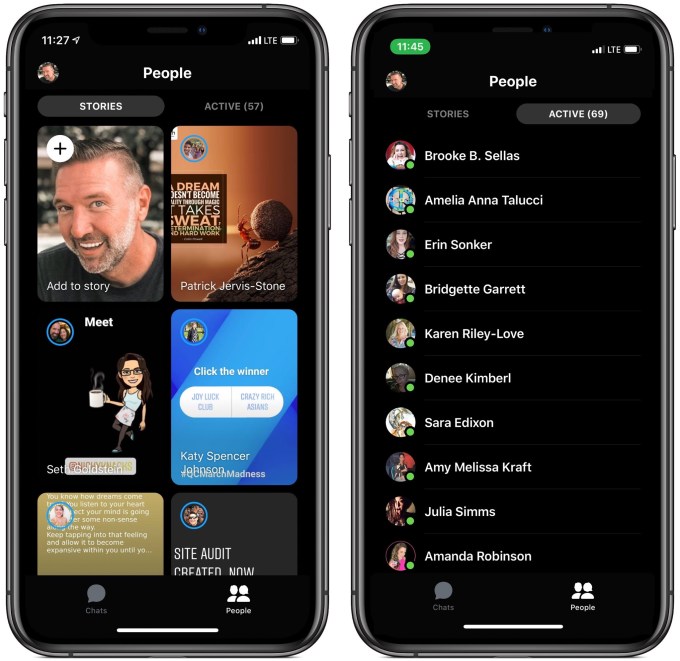
The changes could push users to spend more time visually communicating with friends and consuming content than exploring chat bots for shopping, connecting with businesses, and playing games. That in turn could help Facebook earn more money from Messenger since it’s now showing Stories ads.
TechCrunch was tipped off to the redesign by social media director Jeff Higgins who provided us with extensive screenshots of the update. These show the absence of Discover tab, the switch to just Chat and People tabs, and the People sub-tabs for Stories and Active. We poked around some more and noticed the Instant Games and Transportation options missing from the chat composer’s utility tray. That formerly offered quick Uber and Lyft hailing. Messenger’s M Suggestions also no longer recommend the Transportation feature.
When we asked Messenger about the changes, a spokesperson confirmed that this redesign will start rolling out in the next week, removing Discover and splitting the People tab. They noted that Facebook had announced last August that it planned to eventually axe Discover, and that the added emphasis on Stories was motivated by users’ affinity for the ephemeral social media format. They also told us that Transportation was removed in late 2017, and Instant Games’ removal from the composer is part of the migration to Facebook Gaming announced last July.
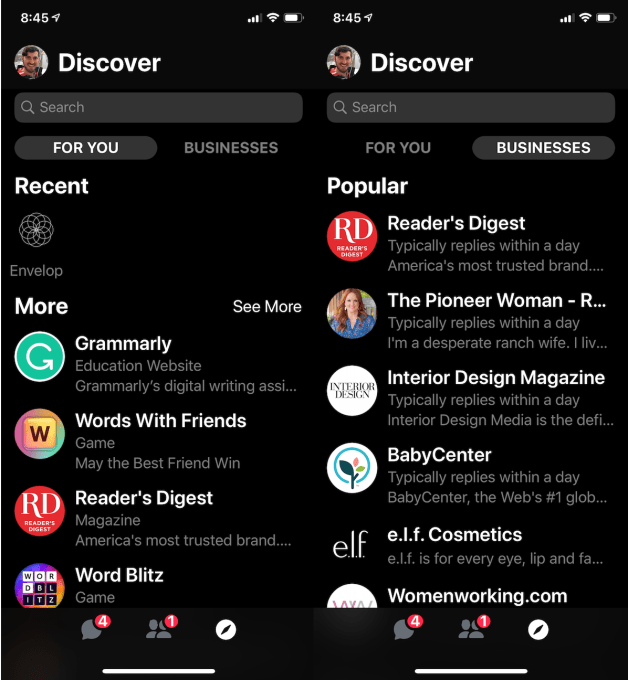
A look at the old Messenger Discover tab that’s being removed
Chat bots, businesses, and games are being hidden, but not completely banished from Messenger. They’ll still be accessible if users purposefully seek them through the Messenger search bar, Pages and ads on Facebook, buttons to start conversations on businesses’ websites, and m.me URL that create QR codes which open to business accounts in Messenger. The spokesperson diplomatically claimed that businesses are still an important part of Messenger.
But without promotion via Discover, businesses will have to rely on their owned or paid marketing channels to gain traction for their chat bots. That could discourage them from building on the Messenger platform.
The Rise And Fall Of Facebook Chat Bots
The update feels like the end of a four-year era for Facebook. Back in 2016, it saw artificially intelligent chat bots as a way for businesses to scalably communicate with people, deliver customer service, and push ecommerce. But when it launched the chat bot platform at its F8 conference that year, it arrived half-baked.
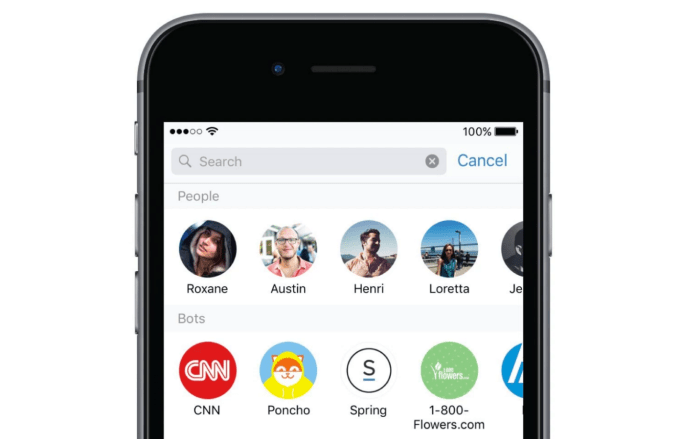
The typing-based semantic user interfaces were confusing, the AI necessary to make chat bots seem human or at least reliably understand their human conversation partners hadn’t evolved yet, and several of the launch partner bots like Poncho The Weather Cat were laughably useless. The public soured on the idea of chat bots, and attempts to improve them felt insufficient.
Messenger launched Discover in 2017 in hopes that free promotion and visibility might convince developers to invest in building better chatbots. Yet by early 2018 even Facebook was backpedaling, shelving its plan to build out a full-service AI personal assistant called M that you could ask to do anything. Instead, it’d merely make AI suggestions of different Messenger features to use like Stickers or reminders based on what you typed. Then it announced last year that it would move Instant Games out of Messenger and into Facebook’s dedicated Gaming tab.

A laughably bad interaction with old Messenger chat bot Poncho The Weather Cat
Now with Discover disappearing, Messenger seems to be surrendering the fight to become a WeChat-style monolithic utility. In China, WeCat serves not just as a messaging app but a way to make payments, hail a taxi, book flights, top up your mobile data, get a loan, find housing, or shop at businesses via mini programs.
 But while that centralized all-in-one style fit Chinese culture, Western markets have experienced more of an unbundling with different apps emerging to handle each of these use cases. Facebook’s constant privacy scandals and increasing anti-trust scrutiny also inhibited this approach with Messenger. Users and the US government weren’t ready to trust Facebook to handle so much of our daily lives. Facebook Messenger also has to jockey with competition like iMessage and Snapchat that could undercut it if it gets too bloated.
So now Messenger is going in the opposite direction. It’s becoming more WhatsApp-like — simple, speedy, and centered around peer-to-peer communication. Visual communication through Stories, with replies to them delivered as messages, feels like a natural extension of this focus while conveniently offering a path to monetization. If Messenger can be the best-in-class place to chat, unencumbered by promotion of chat bots and businesses, users might stay locked into the Facebook ecosystem.

from Social – TechCrunch https://ift.tt/3caA9Qa
Original Content From: https://techcrunch.com
Facebook Messenger ditches Discover, downplaying chat bots
Chat bots were central to Facebook Messenger’s strategy three years ago. Now they’re being hidden from view in the app along with games and businesses. Facebook Messenger is removing the Discover tab this week as it focuses on speed and simplicity instead of broad utility like China’s WeChat.
The changes are part of a larger Messenger redesign that reorients the People tab around Stories as Facebook continues to try to dominate the ephemeral social media format it copied from Snapchat. The People tab now defaults to a full-screen sub-tab of friends’ Stories, and requires a tap over to the Active sub tab to see which friends are online now.
The changes could push users to spend more time visually communicating with friends and consuming content than exploring chat bots for shopping, connecting with businesses, and playing games. That in turn could help Facebook earn more money from Messenger since it’s now showing Stories ads.
TechCrunch was tipped off to the redesign by social media director Jeff Higgins who provided us with extensive screenshots of the update. These show the absence of Discover tab, the switch to just Chat and People tabs, and the People sub-tabs for Stories and Active. We poked around some more and noticed the Instant Games and Transportation options missing from the chat composer’s utility tray. That formerly offered quick Uber and Lyft hailing. Messenger’s M Suggestions also no longer recommend the Transportation feature.
When we asked Messenger about the changes, a spokesperson confirmed that this redesign will start rolling out in the next week, removing Discover and splitting the People tab. They noted that Facebook had announced last August that it planned to eventually axe Discover, and that the added emphasis on Stories was motivated by users’ affinity for the ephemeral social media format. They also told us that Transportation was removed in late 2017, and Instant Games’ removal from the composer is part of the migration to Facebook Gaming announced last July.
A look at the old Messenger Discover tab that’s being removed
Chat bots, businesses, and games are being hidden, but not completely banished from Messenger. They’ll still be accessible if users purposefully seek them through the Messenger search bar, Pages and ads on Facebook, buttons to start conversations on businesses’ websites, and m.me URL that create QR codes which open to business accounts in Messenger. The spokesperson diplomatically claimed that businesses are still an important part of Messenger.
But without promotion via Discover, businesses will have to rely on their owned or paid marketing channels to gain traction for their chat bots. That could discourage them from building on the Messenger platform.
The Rise And Fall Of Facebook Chat Bots
The update feels like the end of a four-year era for Facebook. Back in 2016, it saw artificially intelligent chat bots as a way for businesses to scalably communicate with people, deliver customer service, and push ecommerce. But when it launched the chat bot platform at its F8 conference that year, it arrived half-baked.
The typing-based semantic user interfaces were confusing, the AI necessary to make chat bots seem human or at least reliably understand their human conversation partners hadn’t evolved yet, and several of the launch partner bots like Poncho The Weather Cat were laughably useless. The public soured on the idea of chat bots, and attempts to improve them felt insufficient.
Messenger launched Discover in 2017 in hopes that free promotion and visibility might convince developers to invest in building better chatbots. Yet by early 2018 even Facebook was backpedaling, shelving its plan to build out a full-service AI personal assistant called M that you could ask to do anything. Instead, it’d merely make AI suggestions of different Messenger features to use like Stickers or reminders based on what you typed. Then it announced last year that it would move Instant Games out of Messenger and into Facebook’s dedicated Gaming tab.
A laughably bad interaction with old Messenger chat bot Poncho The Weather Cat
Now with Discover disappearing, Messenger seems to be surrendering the fight to become a WeChat-style monolithic utility. In China, WeCat serves not just as a messaging app but a way to make payments, hail a taxi, book flights, top up your mobile data, get a loan, find housing, or shop at businesses via mini programs.
But while that centralized all-in-one style fit Chinese culture, Western markets have experienced more of an unbundling with different apps emerging to handle each of these use cases. Facebook’s constant privacy scandals and increasing anti-trust scrutiny also inhibited this approach with Messenger. Users and the US government weren’t ready to trust Facebook to handle so much of our daily lives. Facebook Messenger also has to jockey with competition like iMessage and Snapchat that could undercut it if it gets too bloated.
So now Messenger is going in the opposite direction. It’s becoming more WhatsApp-like — simple, speedy, and centered around peer-to-peer communication. Visual communication through Stories, with replies to them delivered as messages, feels like a natural extension of this focus while conveniently offering a path to monetization. If Messenger can be the best-in-class place to chat, unencumbered by promotion of chat bots and businesses, users might stay locked into the Facebook ecosystem.


from Mobile – TechCrunch https://ift.tt/3caA9Qa
ORIGINAL CONTENT FROM: https://techcrunch.com/
Facebook brings its 3D photos feature to users with single-camera phones
Facebook first showed off its 3D photos back in 2018, and shared the technical details behind it a month later. But unless you had one of a handful of phones with dual cameras back then (when they weren’t so common), you couldn’t make your own. Today an update brings 3D photos to those of us still rocking a single camera.
In case you don’t remember or haven’t seen one lately, the 3D photos work by analyzing a 2D picture and slicing it into a ton of layers that move separately when you tilt the phone or scroll. I’m not a big fan of 3D anything, and I don’t even use Facebook, but the simple fact is this feature is pretty cool.

The problem is it used the dual-camera feature to help the system determine distance, which informed how the picture should be sliced. That meant I, with my beautiful iPhone SE, was out of the running — along with about a billion other people who hadn’t bought into the dual-camera thing yet.
But over the last few years the computer vision team over at Facebook has been working on making it possible to do this without dual-camera input. At last they succeeded, and this blog post explains, in terms technical enough that I’m not even going to attempt to summarize them here, just how they did it.
The advances mean that many — though not all — relatively modern single-camera phones should be able to use the feature. Google’s Pixel series is now supported, and single-camera iPhones from the 7 forward. The huge diversity of Android devices makes it hard to say which will and won’t be supported — it depends on a few things not usually listed on the spec sheet — but you’ll be able to tell once your Facebook app updates and you take a picture.


from Mobile – TechCrunch https://ift.tt/2uDFgHI
ORIGINAL CONTENT FROM: https://techcrunch.com/
TECH Solutions - Facebook brings its 3D photos feature to users with single-camera phones
Facebook first showed off its 3D photos back in 2018, and shared the technical details behind it a month later. But unless you had one of a handful of phones with dual cameras back then (when they weren’t so common), you couldn’t make your own. Today an update brings 3D photos to those of us still rocking a single camera.
In case you don’t remember or haven’t seen one lately, the 3D photos work by analyzing a 2D picture and slicing it into a ton of layers that move separately when you tilt the phone or scroll. I’m not a big fan of 3D anything, and I don’t even use Facebook, but the simple fact is this feature is pretty cool.
The problem is it used the dual camera feature to help the system determine distance, which informed how the picture should be sliced. That meant I, with my beautiful iPhone SE, was out of the running — along with about a billion other people who hadn’t bought into the dual-camera thing yet.
But over the last few years the computer vision team over at Facebook has been working on making it possible to do this without dual-camera input. At last they succeeded, and this blog post explains, in terms technical enough that I’m not even going to attempt to summarize them here, just how they did it.
The advances mean that many — though not all — relatively modern single-camera phones should be able to use the feature. Google’s Pixel series is now supported, and single-camera iPhones from the 7 forward. The huge diversity of Android devices makes it hard to say which will and won’t be supported — it depends on a few things not usually listed on the spec sheet — but you’ll be able to tell once your Facebook app updates and you take a picture.

from Social – TechCrunch https://ift.tt/2uDFgHI
Original Content From: https://techcrunch.com
Tech Solutions -Lahore Qalandars bowl first in 12-overs game
Qalandars made three changes while Zalmi had two - with both sides having one injury-enforced replacement
from Pakistan news from ESPN Cricinfo.com https://ift.tt/2wNT03h
Original Content From : https://ift.tt/Ti8aBD
from Pakistan news from ESPN Cricinfo.com https://ift.tt/2wNT03h
Original Content From : https://ift.tt/Ti8aBD
End Game, the startup behind Zombs Royale, raises $3M
End Game Interactive CEO Yang C. Liu has a refreshingly straightforward description of what he and his co-founder Luke Zbihlyj are up to: “We’re just building games. And to be honest, we don’t know what we’re doing.”
Despite this self-proclaimed ignorance, End Game has just raised $3 million in seed funding from an impressive group of investors: The round was led by the game-focused firm Makers Fund, with participation from Clash of Clans developer Supercell, Unity CEO David Helgason, Twitch COO Kevin Lin, Twitch VP Hubert Thieblot, Danny Epstien and Alexandre Cohen of Main Street Advisors, and music executive Scooter Braun.
Liu told me that he and Zbihlyj got their start by building websites tied to existing games, such as PokeVision, a site for finding Pokemon in Pokemon Go. However, they were inspired by the success of simple, browser-based multiplayer games like Slither.io to create games of their own — first Zombs.io, then Spinz.io, then Zombs Royale.
Altogether, End Game says its titles have attracted more than 160 million players, with 1 million people playing in a single day. Zombs Royale, in particular, seems to have been a hit — the battle royale game (where a single map can pit up to 100 players against each other) was one of 2018’s most Googled games in the United States.
Liu said the team’s success convinced them to focus their efforts on game development: “Do we want to make products that people simply use, or games that people think about out when they’re going to school, or going to work, or dream about?”

Zombs Royale was supposedly built in less than four weeks, but Liu said that after its launch in early 2018, the team spent most of the year maintaining and scaling the game. Then 2019 was all about building a team and creating the next game, Fate Arena, a title in the new Auto Chess genre that’s supposed to launch on PC, mobile and other platforms soon.
Liu noted that unlike End Game’s previous work, which featured simple 2D art (“On Zombs Royale and Spinz, I did the art, and it’s terrible”), Fate Arena will feature a “3D, high-fidelity art style.”
But even as the company’s games start looking a little less primitive, the goal is still to develop and iterate quickly. Liu said his goal to fund “many tries” at building other cross-platform, multiplayer games with this seed round.
“We pride ourselves on rapid experimentation,” he said, adding that the key is “not biting off more than we can chew. We design [our games] to scale from the beginning. We don’t necessarily need to be World of Warcraft, where you need to make 100 quests as the baseline. We’re focused on games with a small starting point that can scale into something much bigger.”
Supercell Developer Relations Lead Jaako Harlas made a similar point in a statement included in the funding announcement:
Many companies are quick to point out how fast-moving they are. Then you come across a team like this and realize what being lean and moving fast really means. Yang, Luke and the team have already shown that they can ship accessible games that showcase a real flair for fun, and we look forward to supporting them in their quest for the next big hit game.


from Mobile – TechCrunch https://ift.tt/2TuHFgu
ORIGINAL CONTENT FROM: https://techcrunch.com/
Technical Solutions - Tech Talks #1064 - Jio 5G Launch, Realme 6 Price in India, Vodafone 35Rs 1GB, vivo Apex 2020, F8
Tech Talks #1064 - Jio 5G Launch, Realme 6 Price in India, Vodafone 35Rs 1GB, vivo Apex 2020, F8
TG Deals@ https://tg.deals/ New Channel: https://goo.gl/Jz6p5K Namaskaar Dosto, Tech Talks ke is Episode mein maine aapse kuch interesting Tech News Share ki hai jaise Jio 5G Launch, Realme 6 Price in India, Vodafone 35Rs 1GB, vivo Apex 2020, Facebook F8 aur bahut kuch. Mujhe umeed hai ki yeh video aapko pasand aayega. Share, Support, Subscribe!!! Subscribe: http://bit.ly/1Wfsvt4 Android App: https://ift.tt/2mrm9Gy Youtube: http://www.youtube.com/c/TechnicalGuruji Twitter: http://www.twitter.com/technicalguruji Facebook: https://ift.tt/1Pi5LDP Facebook Myself: https://goo.gl/zUfbUU Instagram: https://ift.tt/1OW2vue Google Plus: https://ift.tt/1Pi5LDS Website: https://ift.tt/2mcM6KV Merchandise: https://ift.tt/2lN4Vbu About : Technical Guruji is a YouTube Channel, where you will find technological videos in Hindi, New Video is Posted Everyday :)
TG Deals@ https://tg.deals/ New Channel: https://goo.gl/Jz6p5K Namaskaar Dosto, Tech Talks ke is Episode mein maine aapse kuch interesting Tech News Share ki hai jaise Jio 5G Launch, Realme 6 Price in India, Vodafone 35Rs 1GB, vivo Apex 2020, Facebook F8 aur bahut kuch. Mujhe umeed hai ki yeh video aapko pasand aayega. Share, Support, Subscribe!!! Subscribe: http://bit.ly/1Wfsvt4 Android App: https://ift.tt/2mrm9Gy Youtube: http://www.youtube.com/c/TechnicalGuruji Twitter: http://www.twitter.com/technicalguruji Facebook: https://ift.tt/1Pi5LDP Facebook Myself: https://goo.gl/zUfbUU Instagram: https://ift.tt/1OW2vue Google Plus: https://ift.tt/1Pi5LDS Website: https://ift.tt/2mcM6KV Merchandise: https://ift.tt/2lN4Vbu About : Technical Guruji is a YouTube Channel, where you will find technological videos in Hindi, New Video is Posted Everyday :)
TECH Solutions - AI ethics plan agreed by Catholic Church and tech giants
The Church signed up to the future of AI - an ethical one - along with Microsoft and IBM.
from BBC News - Technology https://ift.tt/32xNWfp
Original Content From: http://bbci.co.uk
from BBC News - Technology https://ift.tt/32xNWfp
Original Content From: http://bbci.co.uk
Tech Solutions -PCB hopeful England Lions will tour Pakistan next winter
Board hope successful Lions tour can act as precursors to full international series in 2022-23
from Pakistan news from ESPN Cricinfo.com https://ift.tt/2uDWfcV
Original Content From : https://ift.tt/Ti8aBD
from Pakistan news from ESPN Cricinfo.com https://ift.tt/2uDWfcV
Original Content From : https://ift.tt/Ti8aBD
TECH Solutions - Teen hit Yolo raises $8M to let you Snapchat anonymously
It wasn’t a fad. Yolo became the country’s No. 1 app just a week after launch by letting teens ask for anonymous replies to questions they posted on Snapchat. But nine months later, Yolo is still in the top 100 iOS apps and has 10 million active users. Now it’s safeguarding the app from predators while revealing a smart new feature for spinning up anonymous group chats, powered by $8 million in fresh funding.
“What we are trying to build is a new kind of network where there’s a fluidity to identity,” Yolo co-founder Greg Henrion tells me. “We weren’t sure if Yolo was here to stay, but we’re still ranking well and there seems to be a real opportunity in anonymity starting with Snapchat Q&A.”
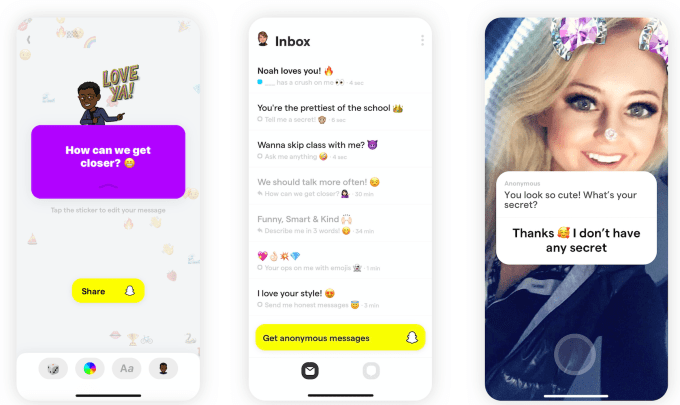
Yolo is the first big win for Snapchat’s Snap Kit platform that lets developers piggyback on its login, Bitmoji avatars, stickers and Stories. This lets tiny development teams build apps that hundreds of millions of people, teens in particular, can instantly sign up for in just a few taps. Another Snap Kit app for meeting new people called Hoop recently spiked to No. 2 on the charts
We haven’t seen this kind of social platform success since Zynga’s empire rose atop Facebook. Spawning more blockbusters like Yolo could ensure that a Snapchat account is a must-have utility for the next generation.
Sleepless nights atop the charts
“For two weeks we basically didn’t sleep,” Henrion recalls about the chaos he and co-founder Clément Raffenoux endured after Yolo shot to No. 1 last May. “You’re trying to stay afloat. It was very, very wild.”
The basic premise of Yolo is that you write a question like, “Who’s my celebrity look alike?”, “What do people really think of me?” or “How could I be nicer?”. You’re then switched over to Snapchat, where you can post the question in your Story or messages with a link back to Yolo. There, people can anonymously leave a response; you can post that and your reply with another post on Snapchat.

Yolo co-founder and CEO Greg Henrion, in real life and Bitmoji
The result is that friends and followers feel comfortable giving you real talk. They don’t have to sugarcoat their answers. And that makes people race to open Yolo each time they get a message. Yolo has seen 26 million downloads across iOS and Android globally, with nearly 70% in the U.S.
Other anonymous apps like tbh (acquired by Facebook) and Sarahah (kicked off the app stores) quickly faded, and others eventually imploded due to bullying, like Secret and YikYak. Although tbh hit No. 1 in September 2017, it was out of the top 500 by November. It seems a combination of inherent virality via Snapchat, easy user acquisition via Snap Kit and sharp product design has given Yolo some staying power. It still managed 2.2 million downloads last month versus a peak of 5.5 million in its first month back in May 2019.
 That June, Yolo quietly raised a $2 million seed round thanks to its sudden success. The team had been grinding since 2017 on a video reactions app called Popshow funded by a small pre-seed round from SV Angel, Shrug Capital and Product Hunt’s Ryan Hoover. They’d previously built music video-making app Mindie that eventually sold to influencer collective Shots Studios. Popshow never caught on, so the team began experimenting on Snap Kit, building a more official Q&A feature for Snapchat than predecessors like Sarahah and Polly. Then, boom. Days after launch, Yolo’s usage exploded.
But to keep users interested, Yolo needed to evolve. That would require more funding for the eight-person team split between Snapchat’s home of Los Angeles and Henrion’s home of Paris.
An honest way to chat
The concept of a social app where users could shift between full anonymity and representation via avatar attracted its $8 million Series A to invest in product and engineering. The round was led by Thrive Capital, Ron Conway’s A.Capital, former TechCrunch editor Alexia Tsotsis’ Dream Machine, Shrug, Day One, Goodwater, Knight VC, ex-Facebooker Bobby Goodlatte, Twitter co-founder Biz Stone and SV Angel’s Brian Pokorny.
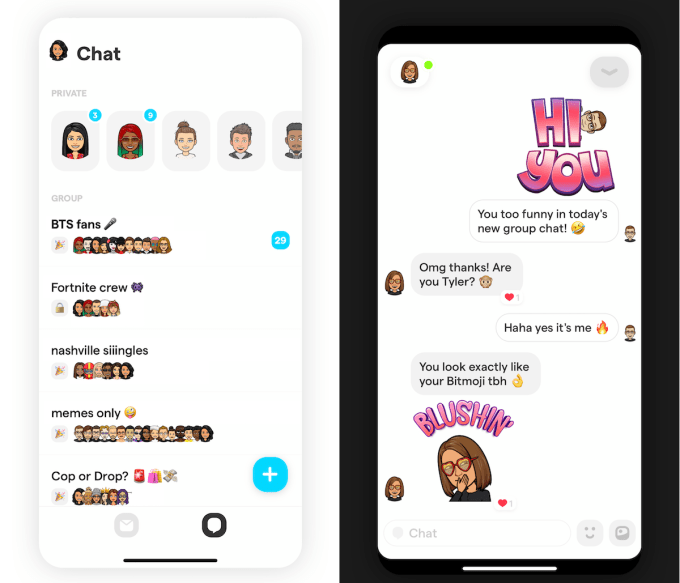
 That cash fueled the release of Yolo’s new group chat feature. You can set up a chat room, give it a name and generate an invite URL or sticker you can post on Snapchat, just like its previous question feature. Friends or friends of friends that are already in can join the group chat, represented by their Bitmoji instead of their name. Yolo suggests people join the more open “party mode” chats where their friends are active.
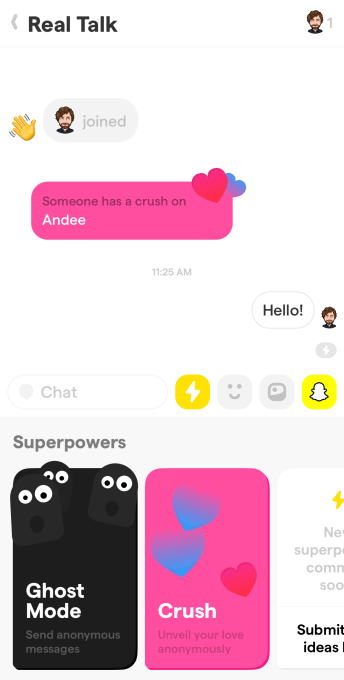
What makes this special is that once an hour, users can tap the Yolo Superpowers button to send a totally anonymous message to the group. More Superpowers are coming, but there’s also an anonymous “Someone has a crush on [name]” message so you can secretly profess your affection to anyone or someone else in the chat.
“The limits of Q&A is that it doesn’t generate real conversation. It’s an ice breaker, but we also want conversations to happen,” Henrion stresses. ” ‘What do you think about this dress?’ The group chat is more about ‘let’s talk about the dress.’ ” The chats could be focused on people you actually know offline, or those you share interests with. The option to restrict group chats to either just your contacts or friends of friends “limits the amount of meeting strangers,” Henrion explains. “This is very different from the public communities like Reddit or the dating apps.”
Can “anonymous” be synonymous with “safe”?
Still, anonymous apps have consistently proven to be havens for cyberbullying and unsafe behavior. Without the accountability of having your name attached, people are free to say awful things. That can be even worse amongst teenagers who might get in trouble for being mean at school but not on an app.
Yolo first focused on messages blocking 10% of overall messages that contained offensive content. That meant blatant hate speech and trolling couldn’t spread through the app. “We’re strict on moderation. When looking at the reviews about bullying, it’s like nothing compared to any other anonymous app. I think we solved 90% of the problem.”
Now it’s working with Snapchat to safeguard the group chats feature. The goal is to ensure Yolo doesn’t actively recommend chat amongst adults to minors and vice-versa. Henrion says this update should roll out soon.
“It’s 2020 and we need to be very responsible” Henrion tells me. “Moderation and growth are the most difficult things to balance. It’s moderation first for sure. We don’t care about growth if it’s not healthy or sustainable.” The new funding also gives Yolo the luxury of pushing back monetization while it focuses on safely adding more users.

By making anonymity more private, Yolo has a chance to sidestep some of the worst elements of human behavior. Making fun of someone has less appeal if there’s no wider audience like trolls exploited in the feeds and comment reels of Secret and YikYak.
That could let the brighter side of anonymity shine through: vulnerability, honesty and deep connections that are enhanced by the absence of embarrassment. With all the change, uncertainty and anxiety that’s part of growing up, teens deserve a place where they can be open with each other and speak their minds. After all, you only live once.

from Social – TechCrunch https://ift.tt/2I69LcA
Original Content From: https://techcrunch.com
Teen hit Yolo raises $8M to let you Snapchat anonymously
It wasn’t a fad. Yolo became the country’s No. 1 app just a week after launch by letting teens ask for anonymous replies to questions they posted on Snapchat. But nine months later, Yolo is still in the top 100 iOS apps and has 10 million active users. Now it’s safeguarding the app from predators while revealing a smart new feature for spinning up anonymous group chats, powered by $8 million in fresh funding.
“What we are trying to build is a new kind of network where there’s a fluidity to identity,” Yolo co-founder Greg Henrion tells me. “We weren’t sure if Yolo was here to stay, but we’re still ranking well and there seems to be a real opportunity in anonymity starting with Snapchat Q&A.”
Yolo is the first big win for Snapchat’s Snap Kit platform that lets developers piggyback on its login, Bitmoji avatars, stickers and Stories. This lets tiny development teams build apps that hundreds of millions of people, teens in particular, can instantly sign up for in just a few taps. Another Snap Kit app for meeting new people called Hoop recently spiked to No. 2 on the charts
We haven’t seen this kind of social platform success since Zynga’s empire rose atop Facebook. Spawning more blockbusters like Yolo could ensure that a Snapchat account is a must-have utility for the next generation.
Sleepless nights atop the charts
“For two weeks we basically didn’t sleep,” Henrion recalls about the chaos he and co-founder Clément Raffenoux endured after Yolo shot to No. 1 last May. “You’re trying to stay afloat. It was very, very wild.”
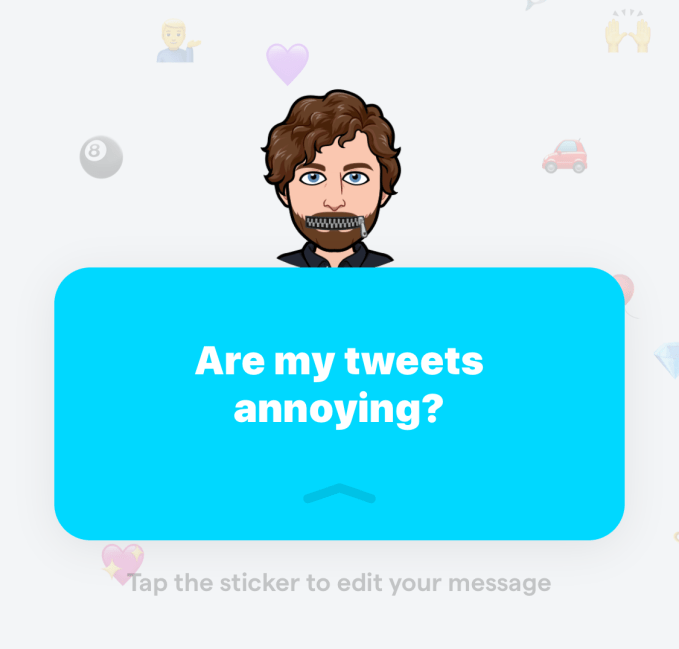
The basic premise of Yolo is that you write a question like, “Who’s my celebrity look alike?”, “What do people really think of me?” or “How could I be nicer?”. You’re then switched over to Snapchat, where you can post the question in your Story or messages with a link back to Yolo. There, people can anonymously leave a response; you can post that and your reply with another post on Snapchat.
Yolo co-founder and CEO Greg Henrion, in real life and Bitmoji
The result is that friends and followers feel comfortable giving you real talk. They don’t have to sugarcoat their answers. And that makes people race to open Yolo each time they get a message. Yolo has seen 26 million downloads across iOS and Android globally, with nearly 70% in the U.S.
Other anonymous apps like tbh (acquired by Facebook) and Sarahah (kicked off the app stores) quickly faded, and others eventually imploded due to bullying, like Secret and YikYak. Although tbh hit No. 1 in September 2017, it was out of the top 500 by November. It seems a combination of inherent virality via Snapchat, easy user acquisition via Snap Kit and sharp product design has given Yolo some staying power. It still managed 2.2 million downloads last month versus a peak of 5.5 million in its first month back in May 2019.
That June, Yolo quietly raised a $2 million seed round thanks to its sudden success. The team had been grinding since 2017 on a video reactions app called Popshow funded by a small pre-seed round from SV Angel, Shrug Capital and Product Hunt’s Ryan Hoover. They’d previously built music video-making app Mindie that eventually sold to influencer collective Shots Studios. Popshow never caught on, so the team began experimenting on Snap Kit, building a more official Q&A feature for Snapchat than predecessors like Sarahah and Polly. Then, boom. Days after launch, Yolo’s usage exploded.
But to keep users interested, Yolo needed to evolve. That would require more funding for the eight-person team split between Snapchat’s home of Los Angeles and Henrion’s home of Paris.
An honest way to chat
The concept of a social app where users could shift between full anonymity and representation via avatar attracted its $8 million Series A to invest in product and engineering. The round was led by Thrive Capital, Ron Conway’s A.Capital, former TechCrunch editor Alexia Tsotsis’ Dream Machine, Shrug, Day One, Goodwater, Knight VC, ex-Facebooker Bobby Goodlatte, Twitter co-founder Biz Stone and SV Angel’s Brian Pokorny.
That cash fueled the release of Yolo’s new group chat feature. You can set up a chat room, give it a name and generate an invite URL or sticker you can post on Snapchat, just like its previous question feature. Friends or friends of friends that are already in can join the group chat, represented by their Bitmoji instead of their name. Yolo suggests people join the more open “party mode” chats where their friends are active.
What makes this special is that once an hour, users can tap the Yolo Superpowers button to send a totally anonymous message to the group. More Superpowers are coming, but there’s also an anonymous “Someone has a crush on [name]” message so you can secretly profess your affection to anyone or someone else in the chat.
“The limits of Q&A is that it doesn’t generate real conversation. It’s an ice breaker, but we also want conversations to happen,” Henrion stresses. ” ‘What do you think about this dress?’ The group chat is more about ‘let’s talk about the dress.’ ” The chats could be focused on people you actually know offline, or those you share interests with. The option to restrict group chats to either just your contacts or friends of friends “limits the amount of meeting strangers,” Henrion explains. “This is very different from the public communities like Reddit or the dating apps.”
Can “anonymous” be synonymous with “safe”?
Still, anonymous apps have consistently proven to be havens for cyberbullying and unsafe behavior. Without the accountability of having your name attached, people are free to say awful things. That can be even worse amongst teenagers who might get in trouble for being mean at school but not on an app.
Yolo first focused on messages blocking 10% of overall messages that contained offensive content. That meant blatant hate speech and trolling couldn’t spread through the app. “We’re strict on moderation. When looking at the reviews about bullying, it’s like nothing compared to any other anonymous app. I think we solved 90% of the problem.”
Now it’s working with Snapchat to safeguard the group chats feature. The goal is to ensure Yolo doesn’t actively recommend chat amongst adults to minors and vice-versa. Henrion says this update should roll out soon.
“It’s 2020 and we need to be very responsible” Henrion tells me. “Moderation and growth are the most difficult things to balance. It’s moderation first for sure. We don’t care about growth if it’s not healthy or sustainable.” The new funding also gives Yolo the luxury of pushing back monetization while it focuses on safely adding more users.
By making anonymity more private, Yolo has a chance to sidestep some of the worst elements of human behavior. Making fun of someone has less appeal if there’s no wider audience like trolls exploited in the feeds and comment reels of Secret and YikYak.
That could let the brighter side of anonymity shine through: vulnerability, honesty and deep connections that are enhanced by the absence of embarrassment. With all the change, uncertainty and anxiety that’s part of growing up, teens deserve a place where they can be open with each other and speak their minds. After all, you only live once.


from Mobile – TechCrunch https://ift.tt/2I69LcA
ORIGINAL CONTENT FROM: https://techcrunch.com/
TECH Solutions - If virtual worlds are so popular, why don’t we have them yet?
If virtual worlds are so enticing, why haven’t we already shifted to them as our online social hubs?
The thought of virtual worlds for socializing evokes Second Life (launched in 2003), where users created unique avatars to socialize, build and trade with each other. Contemporaneous press hype told us that our entry into the metaverse appeared imminent, and a 2006 cover story in BusinessWeek magazine featured an analyst who predicted that Second Life could displace Windows as the leading PC operating system.
That didn’t happen.
Granted, Second Life is still around, albeit with only a few hundred thousand active users. Eve Online is another long-running, open-world MMO where the experience is shaped by users’ contributions and social interactions. It’s been the subject of numerous studies on economics and psychology, given the depth of its data on human interaction, but it remains niche as well.
The popularity of Roblox, which surpassed 100 million MAUs and 40 million user-created experiences in August, and Minecraft, which surpassed 112 million MAUs, shows this movement gaining traction in a bigger way among the youngest generation of internet users.
There are both technical reasons and cultural reasons why participation in virtual worlds will finally go massively mainstream in the next few years.
On the technical side, most consumers have lacked the high-performance hardware necessary to meaningfully participate in advanced MMOs while going about their daily lives. And even if they had the right hardware, they weren’t entering one shared virtual space with all other users, they were just entering one instance of that world which was limited in scope and player count by the capabilities of a single server.
(This is part four of a seven-part series about virtual worlds.)
That’s all in the process of changing:

from Social – TechCrunch https://ift.tt/32B5Lu7
Original Content From: https://techcrunch.com