Wednesday, October 31, 2018

Twitter tests homescreen button to easily switch to reverse chronological

Twitter is digging one of its most important new features out of its settings and putting it within easy reach. Twitter is now testing with a small number of iOS users a homescreen button that lets you instantly switch from its algorithmic timeline that shows the best tweets first but out of order to the old reverse chronological feed that only shows people you follow — no tweets liked by friends or other randomness.

Twitter had previously buried this option in its settings. In mid-September, it fixed the setting so it would only show a raw reverse chronological feed of tweets by people you follow with nothing extra added, and promised a more easily accessible design for the feature in the future. Now we have our first look at it. A little Twitter sparkle icon in the top opens a menu where you can switch between Top Tweets and Latest Tweets, plus a link to your content settings. It would be even better if it was a one-tap toggle.

Twitter’s VP of Product Kayvon Beykpour tweeted that “We want to make it easier to toggle between seeing the latest tweets the top tweets. So we’re experimenting with making this a top-level switch rather than buried in the settings. Feedback welcome.. what do you think?”

Given the backlash back in 2016 when Twitter started shifting to an algorithmically sorted timeline based on what you engaged with, many users will probably think this is great. Whether you’re trying to follow a sports game, a political debate, breaking news, or are just glued to Twitter and want the ordering to make more sense, there are plenty of reasons you might want to switch to reverse chronological.

Still, Twitter’s apprehension to make the setting too accessible makes sense. Hardcore users might prefer reverse chronological, but for most people who only open Twitter a few times per day or week, that’d mean they’d likely miss the tweets from their closest friends that could be drown out by the noise of everyone else. Twitter’s user growth rate perked up after the shift to algorithmic.

We’ve asked whether the setting reverts to the Top Tweets default when you close the app. That might be frustrating to some expert users, but could prevent novice users from accidentally getting stuck in reverse chronological and not knowing how to switch back. The company tells TechCrunch that it’s trying out several different duration options for the setting based on user inactivity to see what works best. For example, one version will revert the setting to the Top Tweets default if they’re gone for a day. That method would make sure people who’ve been inactive long enough to forget changing their timeline setting will get the default back and not end up stuck in a chronological abyss.

If Twitter gets the reversion to default situation figured out, the new button could make the service much more flexible, thereby boosting usage. You could start algorithmic in the morning or after a weekend away to see what you missed, then quickly toggle to reverse chronological if something big happens or you’ll be on it non-stop all day to get the real-time pulse of the world.


from Mobile – TechCrunch https://ift.tt/2QhfcYk
ORIGINAL CONTENT FROM: https://techcrunch.com/

TECH Solutions - Twitter tests homescreen button to easily switch to reverse chronological

Twitter is digging one of its most important new features out of its settings and putting it within easy reach. Twitter is now testing with a small number of iOS users a homescreen button that lets you instantly switch from its algorithmic timeline that shows the best tweets first but out of order to the old reverse chronological feed that only shows people you follow — no tweets liked by friends or other randomness.

Twitter had previously buried this option in its settings. In mid-September, it fixed the setting so it would only show a raw reverse chronological feed of tweets by people you follow with nothing extra added, and promised a more easily accessible design for the feature in the future. Now we have our first look at it. A little Twitter sparkle icon in the top opens a menu where you can switch between Top Tweets and Latest Tweets, plus a link to your content settings. It would be even nicer if that was a one-tap toggle.

Twitter’s VP of Product Kayvon Beykpour tweeted that “We want to make it easier to toggle between seeing the latest tweets the top tweets. So we’re experimenting with making this a top-level switch rather than buried in the settings. Feedback welcome.. what do you think?”

Given the backlash back in 2016 when Twitter started shifting to an algorithmically sorted timeline based on what you engaged with, many users will probably think this is great. Whether you’re trying to follow a sports game, a political debate, breaking news, or are just glued to Twitter and want the ordering to make more sense, there are plenty of reasons you might want to switch to reverse chronological.

Still, Twitter’s apprehension to make the setting too accessible makes sense. Hardcore users might prefer reverse chronological, but for most people who only open Twitter a few times per day or week, that’d mean they’d likely miss the tweets from their closest friends that could be drown out by the noise of everyone else. Twitter’s user growth rate perked up after the shift to algorithmic.

We’ve asked whether the setting reverts to the Top Tweets default when you close the app. That might be frustrating to some expert users, but could prevent novice users from accidentally getting stuck in reverse chronological and not knowing how to switch back. The company tells TechCrunch that it’s trying out several different duration options for the setting based on user inactivity to see what works best. For example, one version will revert the setting to the Top Tweets default if they’re gone for a day. That method would make sure people who’ve been inactive long enough to forget changing their timeline setting will get the default back and not end up stuck in a chronological abyss.

If Twitter gets the reversion to default situation figured out, the new button could make the service much more flexible, thereby boosting usage. You could start algorithmic in the morning or after a weekend away to see what you missed, then quickly toggle to reverse chronological if something big happens or you’ll be on it non-stop all day to get the real-time pulse of the world.


from Social – TechCrunch https://ift.tt/2QhfcYk
Original Content From: https://techcrunch.com

TECH Solutions - US attacks UK plan for digital services tax on tech giants

Plans to impose a new tax on tech giants risks US retaliation and could hurt trade relations.

from BBC News - Technology https://ift.tt/2AEFMVW
Original Content From: http://bbci.co.uk

TECH Solutions - Snapchat’s PR firm sues influencer for not promoting Spectacles on Instagram

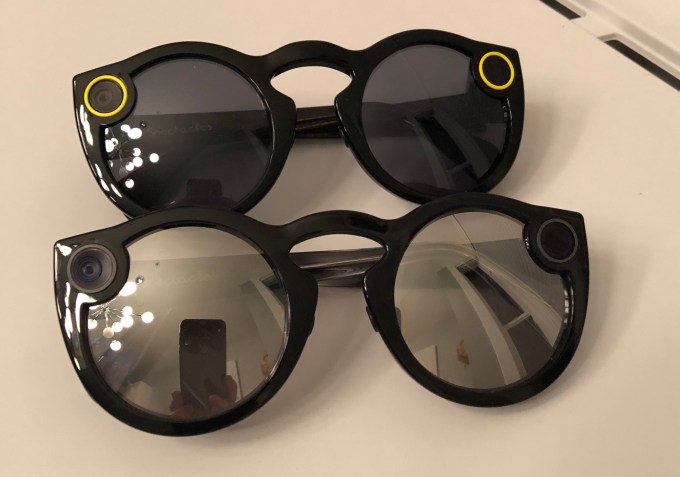
Influcencer marketing could get a lot more accountable if Snapchat’s PR firm wins this lawsuit. Snapchat hoped that social media stars promoting v2 of its Spectacles camera sunglasses on its biggest competitor could boost interest after it only sold 220,000 of v1 and had to take a $40 million write-off. Instead Snap comes off looking a little desperate to make Spectacles seem cool.

Snap Inc comissioned its public relations firm PR Consulting (real imaginative) to buy its an influencer marketing campaign on Instagram. The firm struck a deal with Grown-ish actor Luka Sabbat after he was seen cavorting with Kourtney Kardashian. Sabbat got paid $45,000 up front with the promise of another $15,000 to post himself donning Spectacles on Instagram.

He was contracted to make one Instagram feed post and three Stories posts with him wearing Specs, plus be photographed wearing them in public at Paris and Milan Fashion Weeks. He was supposed to add swipe-up-to-buy links to two of those Story posts, get all the posts pre-approved with PRC, and send it analytics metrics about their performance.

But Sabbat skipped out on two of the Stories, one of the swipe-ups, the photo shoots, the pre-approvals, and the analytics. So as Variety’s Gene Maddaus first reported, PRC is suing Sabbat to recoup the $45,000 it already paid plus another $45,000 in damages.

TechCrunch has attained a copy of the lawsuit filing, embedded below, that states “Sabbat has been unjustly enriched and PRC is entitled to damages.” Snap confirms to us that it hired PRC to run the campaign, and that it also contracted a campaign with fashion blog Man Repeller founder Leandra Medine Cohen. And as a courtesy, I Photoshopped some Spectacles onto Sabbat above.

But interestingly, Snap says it was not involved in the decision to sue Sabbat. The debacle brings unwanted attention to the pay-for-promotion deal that brands typically tried to avoid when commissioning influencer marketing. The whole thing is supposed to feel subtle and natural. Instead, PRC’s suit probably cost Snapchat more than $90,000 in reputation.

The case could solidify the need for influencer marketing contracts to come with prorated payment terms where stars are paid fractions of the total purse after each post rather than getting any upfront, as The Fashion Law writes. PRC’s choice to chase Sabbat even despite the problematic publicity for its client Snap might convince other influencers to abide more closely to the details of their contracts. If social media creators want to keep turning their passion into their profession, they’re going to have to prove they’re accountable. Otherwise brands will slide back to traditional ads.


from Social – TechCrunch https://ift.tt/2Og7vjt
Original Content From: https://techcrunch.com

TECH Solutions - Robot company Starship Technologies start Milton Keynes deliveries

Hundreds of robots are starting to deliver packages to addresses across Milton Keynes.

from BBC News - Technology https://ift.tt/2Szqf0H
Original Content From: http://bbci.co.uk

TECH Solutions - Mobile phone shop staff 'enabling Sim swap scams'

Fraudsters are using lax ID checks at phone shops to commit identity theft, a BBC investigation finds.

from BBC News - Technology https://ift.tt/2ql0xQR
Original Content From: http://bbci.co.uk

TECH Solutions - Royole's bendy-screen FlexPai phone unveiled in China

The FlexPai phone offers a tablet-sized screen when open or three separate displays when folded up.

from BBC News - Technology https://ift.tt/2SzW75h
Original Content From: http://bbci.co.uk

Scared to trade stocks? Titan algorithmically invests for you

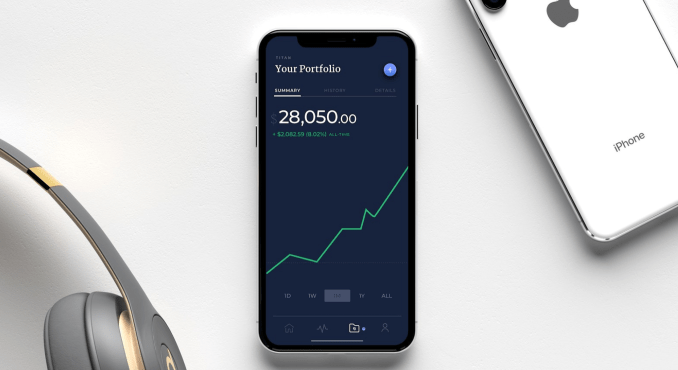
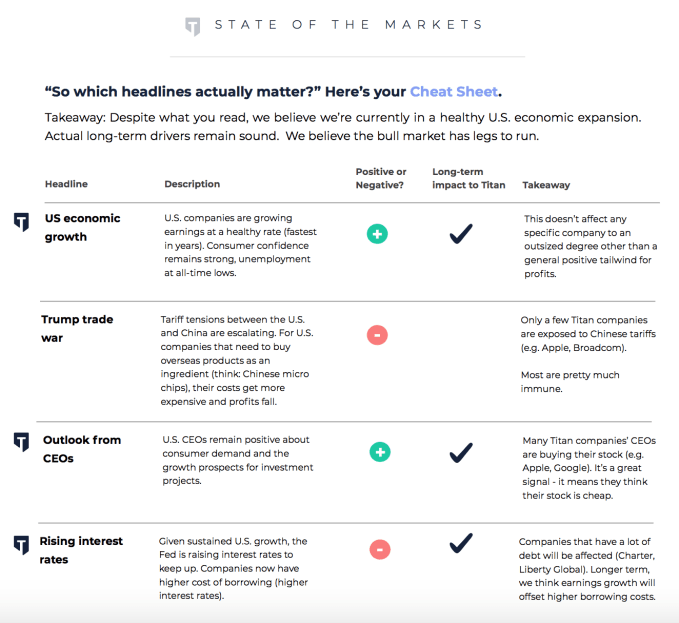
Titan could put an end to stock market FOMO. The app choose the best 20 stocks by scraping top hedge fund data, adds some shorts based on your personal risk profile, and puts your money to work. No worrying about market fluctuations or constantly rebalancing your portfolio. You don’t have do anything, but can get smarter about stocks thanks to its in-app explanations and research reports. Titan wants to be the easiest way to invest in stocks for a mobile generation who want an affordable coach to guide them through the market themselves.

“Our goal is to take things that aren’t accessible [in wealth management] and make them accessible, starting with hedge fund” says Titan co-founder Joe Percoco. That potential to democratize one of the keys to financial mobility has won Titan a $2.5 million seed round from Y Combinator’s co-founder Paul Graham, president Sam Altman, and partners including Gmail creator Paul Bucheit. The rest of the capital comes from Maverick Ventures, BoxGroup, and Liquid2 Ventures.

Titan is where investing meets virality” says Graham. “Those are two very powerful forces.” Since TechCrunch broke the news of Titan’s launch in August, it’s doubled its assets under management to $20 million and hired its first non-founder engineer.

Now it’s launching in-app educational videos so stock market dummies can get up to speed if they want to understand where there money’s going amidst a swirling see of financial news..”There are so many different headlines telling so many different narratives” Percoco tells me. “Everyone is searching for explanations in a voice they trust. An ‘ETF’ can’t talk back. Sometimes a human face is better than writing. A video can really help people make choices.” Here’s it’s two-minute video about Facebook’s Q2 earnings a few months ago, explaining why the share price crashed 25 percent:

Percoco and Clayton Gardner met on their first day of Wharton business school while their third co-founder was earning a hedge fund patent and studying computer science at Stanford. They went on to work at hedge funds and private equity firms like Goldman Sachs, but got fed up just growing the fortunes of the already rich.

So they started Titan to invent a modern, mobile version of BlackRock, the investment giant founded in the 80s. Titan uses the public disclosures of hedge funds to find consensus around the 20 best performing stocks. With as little as $1000, users can let Titan robo-manage their investments for a 1 percent fee on assets. Users provide some info on how big they want to gamble, and Titan personalizes their portfolio with more or less conservative shorts to hedge their bets.

Titan’s simplicity combined with the sense of participation could help it grow quickly. It sits between do-it-yourself options like Robinhood or E*Trade where you’re basically left to fend for yourself, and totally passive options like Wealthfront and Betterment, where you’re so divorced from your portfolio that you’re not learning. Managed hedge funds and fellow active investment vehicles like BlackRock with a human advisor can require a $100,000 minimum investment that’s too steep for millennials.

“Even the best hedge fund in the world is only going to send you a PDF every 90 days” Percoco explains. But Titan doesn’t want you nervously checking your portfolio non-stop. “Our median user checks the app once per day.” That seems like a healthy balance between awareness and sanity. It thinks its education and informative push notifications make it worth a higher required investment and fees than Wealthfront charges.


Essentially, Titan is a stock trading auto-pilot merged with a flight simulator so you improve your finance skills without having to fear a crash. Percoco tells me the sense of accomplishment that engenders is why clients say they’re telling friends about Titan. “When I invest, I look for companies that are growing quickly and making a huge positive impact on the world. Titan is one of those companies” investor Altman says. “I think they could improve the financial wellbeing of an entire generation.”


from Mobile – TechCrunch https://ift.tt/2OigZdW
ORIGINAL CONTENT FROM: https://techcrunch.com/

TECH Solutions - Twitter’s spam reporting tool now lets you specify type, including if it’s a fake account

Twitter is adding more nuance to its spam reporting tools, the company announced today. Instead of simply flagging a tweet as posting spam, users can now specify what kind of spam you’re seeing by way of a new menu of choices. Among these is the option to report spam you believe to be from a fake Twitter account.

Now, when you tap the “Report Tweet” option and choose “It’s suspicious or spam” from the first menu, you’re presented with a new selection of choices where you can pick what kind of spam the tweet contains.

Here, you can pick from options that specify if the tweet is posting a malicious link of some kind, if it’s from a fake account, if it’s using the Reply function to send spam, or if it’s using unrelated hashtags.

These last two tricks are regularly used by spammers to increase the visibility of their tweets.

Often, high-profile Twitter users will see replies to their tweets promoting the spammers’ content. For example, check any of @elonmusk’s thread for crypto scammers’ tweets – a problem so severe, that when Elon played along one time as a joke, Twitter locked his account.

Using hashtags, meanwhile, allows spammers to get attention from those people searching Twitter’s Trends.

And of course, spammers are often posting prohibited content, like malicious links, links to phishing sites, and other dangerous links.

But Twitter users will probably be most interested in the new option to report fake accounts.

There’s been a lot of name-calling on Twitter today following the emergence of reports of Russian bots and trolls flooding Twitter, in an attempt to influence U.S. politics with disinformation. Often, users in disagreements on the site will call someone “bot” as a way to shut down a conversation.

Twitter itself has been suspending real bots left and right in recent months. It deleted 200,000 Russian troll tweets earlier this year, for example, and suspended more than 70 million fake accounts in May and June, according to reports.

Now users will be able to report those accounts they believe to be bots, as well.

To what extent Twitter will rely on these user-generated reports over its own algorithmic-based bot detection systems, or other factors (like IP addresses or suspicious behavior), is unclear.

It’s also unclear if people can ban together to mass report an account as “fake” in an attempt to remove a real person’s account. But someone will surely soon test that out.

Prior to the change, users were able to report spam but not the type of spam, Twitter’s documentation today still confirms.

Twitter tells us the updated reporting flow will simply allow the company to collect more detail so it can “identify and remove spam more effectively.”


from Social – TechCrunch https://ift.tt/2AE1HwA
Original Content From: https://techcrunch.com

TECH Solutions - Eurostar resets customer passwords after hack attack

The rail firm reset passwords after detecting efforts to break into some accounts earlier this month.

from BBC News - Technology https://ift.tt/2Q9IZlU
Original Content From: http://bbci.co.uk

Consumers spent $329M on the top 10 subscription video apps last quarter

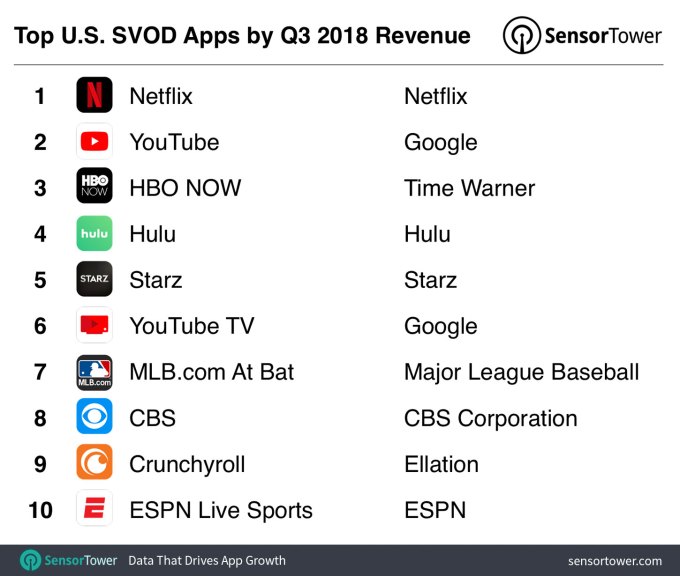
Last year, the top subscription video apps like Netflix and Hulu raked in a combined $781 million, and that trend is showing no sign of slowing down in 2018. In the third quarter of 2018, U.S. consumers spent an estimated $329 million in the top 10 subscription video-on-demand apps across the App Store and Google Play – a figure that’s up 15 percent from the $285 million spent in Q1.

The data is the latest in a new report from app intelligence firm Sensor Tower, which has been following the growth of subscription video apps for some time. Last year, for example, it found that Netflix’s app topped the charts in terms of revenue, when compared with all the other non-game apps on the market.

Netflix hasn’t fallen from its top ranked position, the new data shows. In fact, it’s continuing to grow.

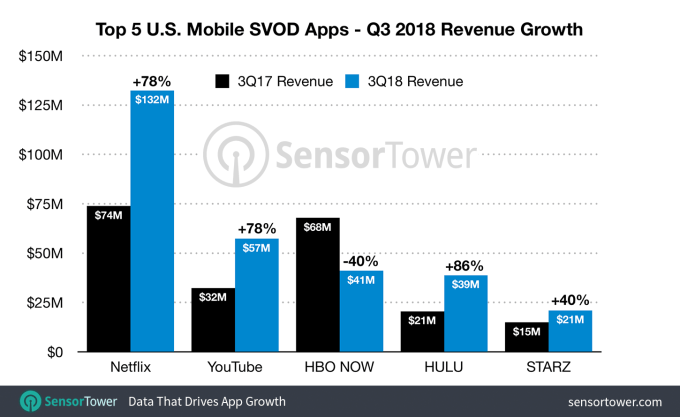
The app pulled in an estimated $132 million in consumer spending across the app stores in Q3, which is up 78 percent from the $74 million spent in the third quarter of 2017.

However, Hulu is now growing faster, the report found. It saw subscription revenue jump 86 percent to $39 million, up from $21 million a year ago.

It seems some consumers may have made the move to Hulu thanks to the extra cash they had on hand, thanks to dropping their HBO subscription.

The only subscription video app that saw revenue decline in Q3 was HBO NOW, which took in $41 million in the quarter, down 40 percent from the $68 million in Q3 2017. But notably absent this quarter was the network’s biggest draw, “Game of Thrones,” which had been airing at this time last year. A drop was expected.

The top grossing chart of these subscription video apps for Q3 2018 looks very similar to last year’s in terms of the apps included, and sometimes, even their rankings.

But two services made moves, the report says.

YouTube TV jumped from $3 million in the year-ago quarter to $16 million in Q3 on Apple’s App Store, thanks to its expanded market penetration and consumer adoption. And ESPN Live Sports, which added in-app subscriptions in Q2, grossed $4.6 million in the third quarter, up 119 percent from Q2.

Even CBS is doing well, despite the fact that not everyone loves the new “Star Trek.”

Still, it appears CBS made a good move by betting on fans’ devotion to the franchise, as U.S. consumers spent $6 million in the app in Q3 2018, up 50 percent from the $4 million spent in Q3 2017.

The report’s data includes subscription revenues only, not refunds or in-app advertising revenues, Sensor Tower notes.

The broad increases in consumer spending on these video apps is yet another example of the significant and growing subscription business – much of which is taking place on mobile. Subscriptions accounted for $10.6 billion in consumer spend on the App Store in 2017, and are poised to grow to $75.7 billion by 2022, an earlier report found.

However, the top subscription apps aren’t all video apps. Others that consistently rank highly in the U.S. include Tinder, Spotify and Pandora, for example. Currently, the top grossing chart for the App Store includes a number of non-games, like Netflix (#1), YouTube (#2), Tinder (#3), Pandora (#4), Hulu (#7), and Bumble (#8).


from Mobile – TechCrunch https://ift.tt/2OYMbnK
ORIGINAL CONTENT FROM: https://techcrunch.com/

TECH Solutions - Google executive leaves after sexual harassment claim

The New York Times reported the executive had been accused of sexual harassment in 2013.

from BBC News - Technology https://ift.tt/2EU06XR
Original Content From: http://bbci.co.uk

Tech Solutions -Pakistan bat in bid to extend winning run

New Zealand hand debut to 30-year old left-arm spinner Ajaz Patel in their first international fixture in seven months

from Pakistan news from ESPN Cricinfo.com https://ift.tt/2ADXdWR
Original Content From : https://ift.tt/Ti8aBD

Technical Solutions - Tech Talks #648 - iPad Pro 2018, MacBook Air 2018, Samsung 5G, Poco F1 Updates, Nubia X, Fortnite

Tech Talks #648 - iPad Pro 2018, MacBook Air 2018, Samsung 5G, Poco F1 Updates, Nubia X, Fortnite
TG Deals@ https://tg.deals/ New Channel: https://goo.gl/Jz6p5K Namaskaar Dosto, Tech Talks ke is Episode mein maine aapse kuch interesting Tech News Share ki hai jaise iPad Pro 2018, Macbook Air 2018, Fortnite on Nintendo, Poco F1 Android P and Q Updates, Lenovo Z5 Pro aur bahut kuch. Mujhe umeed hai ki yeh video aapko pasand aayega. Share, Support, Subscribe!!! Subscribe: http://bit.ly/1Wfsvt4 Android App: https://ift.tt/2mrm9Gy Youtube: http://www.youtube.com/c/TechnicalGuruji Twitter: http://www.twitter.com/technicalguruji Facebook: https://ift.tt/1Pi5LDP Facebook Myself: https://goo.gl/zUfbUU Instagram: https://ift.tt/1OW2vue Google Plus: https://ift.tt/1Pi5LDS Website: https://ift.tt/2mcM6KV Merchandise: https://ift.tt/2lN4Vbu About : Technical Guruji is a YouTube Channel, where you will find technological videos in Hindi, New Video is Posted Everyday :)


TECH Solutions - Yosemite fall: Victims identified as married bloggers from India

The couple who fell to their deaths had blogged about their love for travel and each other.

from BBC News - Technology https://ift.tt/2RosceX
Original Content From: http://bbci.co.uk

TECH Solutions - Fifa: Governing body reveals IT data hack earlier this year

Football's world governing body Fifa says information was hacked from its IT systems earlier this year.

from BBC News - Technology https://ift.tt/2Sz5ZfB
Original Content From: http://bbci.co.uk

TECH Solutions - Apple Watches owners asked to return devices for repair after update glitch

Apple has withdrawn a software update after complaints that it "bricked" some owners' smartwatches.

from BBC News - Technology https://ift.tt/2qmE5H2
Original Content From: http://bbci.co.uk

TECH Solutions - Handshake, a LinkedIn for university students and diversity, raises $40M on a $275M valuation

LinkedIn has created and — with 562 million users — leads the market in social platforms for people who want to network with others in their professions, and look for jobs. Now a startup that hopes to take it on in a specific niche — university students and recent grads, with a focus on diversity and inclusion — has raised a substantial round to grow. Handshake, a platform for both students looking to take their early career steps and employers who want to reach them, has raised $40 million in a Series C round of funding, after hitting 14 million users in the U.S. across 700 universities, and 300,000 employers targeting them.

The company is now valued at $275 million post-money, according to figures from PitchBook, a big leap on its valuation at the Series B stage two years ago, when it was valued at $108 million.

The funding is notable not just for that valuation hike — and the implication that many think it could give Microsoft-owned LinkedIn a run for its money among 20-somethings — but for who is doing the backing.

The round was led by EQT Ventures, the investment arm of European holding company and PE firm EQT, with participation also from several investment organizations that have put a focus on backing interesting startups in the education sphere, including the Chan Zuckerberg Initiative, Omidyar Network, Reach Capital; as well as True Ventures, Kleiner Perkins, Lightspeed Venture Partners, Spark Capital and KPCB Edge. Several of these are repeat investors and the total raised by Handshake — not to be confused with the B2B e-commerce platform of the same name — to $74 million.

To date, Handshake has only been active in the U.S. The company was founded in 2014 originally named Stryder by three graduates of the University of Michigan — Garrett Lord (currently the CEO), Scott Ringwelski (CTO) and Ben Christensen (a board member). The plan is to use the new funding to expand into more markets like Europe, using EQT’s network of businesses in the region to help it along.

LinkedIn has been making a lot of efforts over the years to court younger users and bring them into the LinkedIn fold earlier.

In 2013, the company lowered its minimum age for users to 13 and launched dedicated pages for universities. In 2014, LinkedIn started to add in more tools for younger users to connect with universities and their university-related networks on the platform. And through various e-learning efforts, LinkedIn has been trying to create a bridge between the kind of learning you might do at university, and what you might do after you leave to further your career.

The behemoth also started to take baby steps into providing more insights into diversity for those doing hiring, by letting recruiters examine search results by gender; and by providing bigger insights into the wider pool of people on LinkedIn.

Part of the reason for the baby steps, I’m guessing, is that LinkedIn simply lacks the data from its users to do more faster, and so that leaves a lot of room for a rival to step in.

In that vein, it seems Handshake is trying to position itself as a platform that is considering and thinking about how to address diversity from the ground up, as a native part of its platform while it is still small and growing.

One of the ways that Handshake gets more details about its members is through its partnerships with universities, which helps to populate information about their profiles, rather than relying on a person filling out the details manually. (To register for an account, you use your university address, similar to how Facebook worked when it first launched.)

Handshake also has relationships with more than 100 minority-serving institutions, which include Historically Black Colleges and Universities, and Hispanic Serving Institutions in the U.S., to bring them and their students more closely into that fold.

On the side of employers, it includes more search features for recruiters to search using more specific parameters in the effort to make more diverse hiring choices. “Candidates who might not have the right connections or privileged background can get in front of Fortune 500 companies,” the company notes.

“Our Handshake community is tackling the so-called ‘pipeline problem’ head on. Skilled students are on every campus in every corner of the country and we’re proud to help employers discover, recruit and hire up-and-coming talent from all backgrounds,” said Garrett Lord, Handshake Co-Founder and CEO, in a statement. “Students around the world experience the same inequality in the recruiting process, so we’re excited to partner with Alastair Mitchell” — the EQT partner leading the investment — “and EQT Ventures to expand our impact beyond the United States.”

That’s not to say that inclusion and diversity are the only issues that Handshake is tackling.

The company cites a 2018 Strada-Burning Glass Study that says more than 43 percent of graduates are underemployed — either not earning their full potential, or doing a job that doesn’t utilise their skills — in their first job out of college . “Of those who graduate underemployed, 50% remain underemployed 10 years after graduation.” There is, in other words, a big employment gap specifically with recent grads, and while many will land plum positions, many others flail, and the idea is that Handshake will help specifically to address that by improving how well people are matched to positions that are open.

This is, in fact, an interesting counterpoint to the fact that we also have a lot of ageism in certain fields, where older people are often overlooked — perhaps another niche market that is ripe for tackling?

Handshake today makes money much in the same way that LinkedIn does: it offers paid usage tiers for its users to unlock more features. In the startup’s case, a Premium employer tier called the Talent Engagement Suite was recently launched to let organizations search by diversity parameters and other more specific criteria. That appears to be the path that Handshake plans to follow going ahead, doubling its team to 200 with more people in product and engineering roles to build out more analytics and search and recommendations algorithms.

It’s also making some key hires for the next age. Christine Y. Cruzvergara, ex-Associate Provost and Executive Director for Career Education at Wellesley College, is joining as VP of Higher Education and Student Success, to work with institutions precisely on more inclusive initiatives and products.

“CZI is thrilled to support Handshake as it connects talented students to career opportunities that enable them to reach their full potential,”  said Vivian Wu, Managing Partner of Ventures at the Chan Zuckerberg Initiative, in a statement. “Handshake’s approach – expanding access, building student community and support, and showcasing accomplishments beyond college and degree – produces real results, especially for young people from communities that haven’t had access to high quality job and life opportunities.”


from Social – TechCrunch https://ift.tt/2CR2bkG
Original Content From: https://techcrunch.com

TECH Solutions - Fake Cambridge Analytica ad hits Facebook

The bogus advert purports to be for the BeLeave Brexit campaign and received more than 1,000 views.

from BBC News - Technology https://ift.tt/2Ssdfdn
Original Content From: http://bbci.co.uk

TECH Solutions - Zuckerberg gets joint summons from UK and Canadian parliaments

Two separate parliamentary committees, in the UK and Canada, have issued an unprecedented international joint summons for Facebook’s CEO Mark Zuckerberg to appear before them.

The committees are investigating the impact of online disinformation on democratic processes and want Zuckerberg to answer questions related to the Cambridge Analytica-Facebook user data misuse scandal, which both have been probing this year.

More broadly, they are also seeking greater detail about Facebook’s digital policies and information governance practices — not least, in light of fresh data breaches — as they continue to investigate the democratic impacts and economic incentives related to the spread of online disinformation via social media platforms.

In a letter sent to the Facebook founder today, the chairs of the UK’s Digital, Culture, Media and Sport (DCMS) committee and the Canadian Standing Committee on Access to Information, Privacy and Ethics (SCAIPE), Damian Collins and Bob Zimmer respectively, write that they intend to hold a “special joint parliamentary hearing at the Westminster Parliament”, on November 27 — to form an “‘international grand committee’ on disinformation and fake news”.

“This will be led by ourselves but a number of other parliaments are likely to be represented,” they continue. “No such joint hearing has ever been held. Given your self-declared objective to “fix” Facebook, and to prevent the platform’s malign use in world affairs and democratic process, we would like to give you the chance to appear at this hearing.”

Both committees say they will be issuing their final reports into online disinformation by the end of December.

The DCMS committee has already put out a preliminary report this summer, following a number of hearings with company representatives and data experts, in which it called for urgent action from government to combat online disinformation and defend democracy — including suggesting it look at a levy on social media platforms to fund educational programs in digital literacy.

Although the UK government has so far declined to seize on the bulk of the committee’s recommendations — apparently preferring a ‘wait and gather evidence’ (and/or ‘kick a politically charged issue into the long grass’) approach.

Meanwhile, Canada’s interest in the democratic damage caused by so-called ‘fake news’ has been sharpened by AIQ, the data company linked to Cambridge Analytica, as one of its data handlers and system developers — and described by CA whistleblower Chris Wylie as essentially a division of his former employer — being located on its soil.

The SCAIPE committee has already held multiple, excoriating sessions interrogating executives from AIQ, which have been watched with close interest by at least some lawmakers across the Atlantic…

At the same time the DCMS committee has tried and failed repeatedly to get Facebook’s CEO before it during the course of its multi-month inquiry into online disinformation. Instead Facebook despatched a number of less senior staffers, culminating with its CTO — Mike Schroepfer — who spent around five hours being roasted by visibly irate committee members. And whose answers left it still unsatisfied.

Yet as political concern about election interference has stepped up steeply this year, Zuckerberg has attended sessions in the US Senate and House in April — to face (but not necessarily answer) policymakers’ questions.

He also appeared before a meeting of the EU parliament’s council of presidents — where he was heckled for dodging MEPs’ specific concerns.

But the UK parliament has been consistently snubbed. At the last, the DCMS committee resorted to saying it would issue Zuckerberg with a formal summons the next time he stepped on UK soil (and of course he hasn’t).

They’re now trying a different tack — in the form of a grand coalition of international lawmakers. From two — and possibly more — countries.

While the chairs of the UK and Canadian committees say they understand Zuckerberg cannot make himself available “to all parliaments” they argue Facebook’s users in other countries “need a line of accountability to your organisation — directly, via yourself”, adding: “We would have thought that this responsibility is something that you would want to take up. We both plan to issue final reports on this issue by the end of this December, 2018. The hearing of your evidence is now overdue, and urgent.”

“We call on you to take up this historic opportunity to tell parliamentarians from both sides of the Atlantic and beyond about the measures Facebook is taking to halt the spread of disinformation on your platform, and to protect user data,” they also write.

So far though, where non-domestic lawmakers are concerned, it’s only been elected representatives of the European Union’s 28 Member States who have proved to have enough collective political clout and pulling power to secure a little facetime with Zuckerberg.

So another Facebook snub seems the most likely response to the latest summons.

“We’ve received the committee’s letter and will respond to Mr Collins by his deadline,” a Facebook spokesperson told us when asked whether it would be despatching Zuckerberg this time.

The committee has given Facebook until November 7 to reply.

Perhaps the company will send its new global policy chief, Nick Clegg — who would at least be an all-too familiar face to Westminster lawmakers, having previously served as the UK’s deputy PM.

Even if Collins et al’s latest gambit still doesn’t net them Zuckerberg, the international coalition approach the two committees are now taking is interesting, given the challenges for many governments of regulating global platforms like Facebook whose user bases can scale bigger than some entire nations.

If the committees were to recruit lawmakers from additional countries to their joint hearing — Myanmar, for example, where Facebook’s platform has been accused of accelerating ethnic violence — such an invitation might be rather harder for Zuckerberg to ignore.

After all, Facebook does claim: “We are accountable.” And Zuckerberg is its CEO. (Though it does not state who exactly Facebook/Zuckerberg feels accountable to.)

While forming a joint international committee is a new tactic, UK and Canadian lawmakers and regulatory bodies have been working together for many months now — as part of their respective inquiries and investigations, and as they’ve sought to unpick complex data trails and understand transnational corporate structures.

One thing is increasingly clear when looking at the tangled web where politics and social media collide (with mass opinion manipulation the intended outcome): The interconnected, cross-border nature of the Internet, when meshed with well-funded digital political campaigning — and indeed buckets of personal data, is now placing huge strain on traditional legal structures at the nation-state level.

National election laws reliant on regulating things like campaign spending and joint working, as the UK’s laws are supposed to, simply won’t work unless you can actually follow the money and genuinely map the relationships.

And where use of personal data for online political ad-targeting is concerned, ethics must be front and center — as the UK’s data watchdog has warned.


from Social – TechCrunch https://ift.tt/2P0eYZe
Original Content From: https://techcrunch.com

TECH Solutions - Cardiff tech firm: 'We'll pay £100k, but can't get staff'

A tech skills shortage means some Welsh workers receive daily job offers, and salaries are increasing.

from BBC News - Technology https://ift.tt/2RpoaD5
Original Content From: http://bbci.co.uk

TECH Solutions - Facebook daily visits growth slows as sales miss forecasts

The social media firm is seeing users shift from its most profitable business amid rising costs.

from BBC News - Technology https://ift.tt/2OgIHI9
Original Content From: http://bbci.co.uk

Technical Solutions - 5G is Coming Soon - What to Expect? 5G Technology and Applications 🔥🔥🔥

5G is Coming Soon - What to Expect? 5G Technology and Applications 🔥🔥🔥
Namaskaar Dosto, is video mein maine aapse 5G Technology ke baare mein baat ki hai, aap sabhi ne bahut baar suna hoga ki 5G aane wala hai, but 5G actual mein kya hai, kaise kaam karega, aur kab tak aa sakta hai yahi sab baatein maine aapko is video mein batayi hai. 5G hum bahut jaldi hi use karne waale hai aur aise mein hamare paas bahut se options honge alag alag tareeke se is Technology ko use karne ke, chahe woh connected cars ho ya fir remote surgeries ya fir IoT devices. 5G ke aane ke baad hum bahut easily connect kar payenge aur data ko enjoy kar payenge. Mujhe umeed hai ki 5G technology ki yeh video aapko pasand aayegi. Share, Support, Subscribe!!! Subscribe: http://bit.ly/1Wfsvt4 Android App: https://ift.tt/2mrm9Gy Youtube: http://www.youtube.com/c/TechnicalGuruji Twitter: http://www.twitter.com/technicalguruji Facebook: https://ift.tt/1Pi5LDP Facebook Myself: https://goo.gl/zUfbUU Instagram: https://ift.tt/1OW2vue Google Plus: https://ift.tt/1Pi5LDS Website: https://ift.tt/2mcM6KV Merchandise: https://ift.tt/2lN4Vbu About : Technical Guruji is a YouTube Channel, where you will find technological videos in Hindi, New Video is Posted Everyday :)


Tuesday, October 30, 2018

TECH Solutions - Facebook bans the Proud Boys, cutting the group off from its main recruitment platform

Facebook is moving to ban the Proud Boys, a far-right men’s organization with ties to white supremacist groups. Business Insider first reported the decision. Facebook confirmed the decision to ban the Proud Boys from Facebook and Instagram to TechCrunch, indicating that the group (and presumably its leader Gavin McInnes) now meet the company’s definition of a hate organization or figure.

Facebook provided the following statement:

“Our team continues to study trends in organized hate and hate speech and works with partners to better understand hate organizations as they evolve. We ban these organizations and individuals from our platforms and also remove all praise and support when we become aware of it. We will continue to review content, Pages, and people that violate our policies, take action against hate speech and hate organizations to help keep our community safe.”

Even compared to other groups on the far right with online origins, the Proud Boys maximize their impact through social networking. The organization, founded by provocateur and Vice founder McInnes, relies on Facebook as its primary recruitment tool. As we reported in August, the Proud Boys operate a surprisingly sophisticated network for getting new members into the fold via many local and regional Facebook groups. All of it relies on Facebook — the Proud Boys homepage even links out to the web of Facebook groups to guide potential recruits toward next steps.

At the time of writing, Facebook’s ban appeared to affect some Proud Boys groups and not others. The profile of Proud Boys founder McInnes appears to still be functional. Facebook’s decision to act against the organization is likely tied to the recent arrest of five Proud Boys members in New York City on charges including assault, criminal possession of a weapon and gang assault.


from Social – TechCrunch https://ift.tt/2CSNSfu
Original Content From: https://techcrunch.com

TECH Solutions - Can artificial intelligence help stop religious violence?

Oxford University researchers have created a simulation designed to help prevent religious conflict.

from BBC News - Technology https://ift.tt/2zeK8Bw
Original Content From: http://bbci.co.uk

TECH Solutions - Twitter, why are you such a hot mess?

Today, Jack Dorsey tweeted a link to his company’s latest gesture toward ongoing political relevance, a U.S. midterms news center collecting “the latest news and top commentary” on the country’s extraordinarily consequential upcoming election. If curated and filtered properly, that could be useful! Imagine. Unfortunately, rife with fake news, the tool is just another of Twitter’s small yet increasingly consequential disasters.

Beyond a promotional tweet from Dorsey, Twitter’s new offering is kind of buried — probably for the best. On desktop it’s a not particularly useful mash of national news reporters, local candidates and assorted unverifiable partisans. As Buzzfeed news details, the tool is swimming with conspiracy theories, including ones involving the migrant caravan. According to his social media posts, the Pittsburgh shooter was at least partially motivated by similar conspiracies, so this is not a good look to say the least.

Why launch a tool like this before performing the most basic cursory scan for the kind of low-quality sources that already have your company in hot water? Why have your chief executive promote it? Why why why

A few hours after Dorsey’s tweet, likely after the prominent callout, the main feed looked a bit tamer than it did at first glance. Subpages for local races appear mostly populated by candidates themselves, while the national feed looks more like an algorithmically generated echo chamber version of my regular Twitter feed, with inexplicably generous helpings of MSNBC pundits and more lefty activists.

For Twitter users already immersed in conspiracies, particularly those that incubate so successfully on the far right, does this feed offer yet another echo chamber disguised as a neutral news source? In spite of its sometimes dubiously left-leanings, my feed is still peppered with tweets from undercover video provocateur James O’Keefe — not exactly a high quality source.

In May, Twitter announced that political candidates would get a special badge, making them stand out from other users and potential imposters. That was useful! Anything that helps Twitter function as a fast news source with light context is a positive step, but unfortunately we haven’t seen a whole lot in this direction.

Social media companies need to stop launching additional amplification tools into the ominous void. No social tech company has yet exhibited a meaningful understanding of the systemic shifts that need to happen — possibly product-rending shifts — to dissuade bad actors and straight up disinformation from spreading like a back-to-school virus. 

Unfortunately, a week before the U.S. midterm elections, Twitter looks as disinterested as ever in the social disease wreaking havoc on its platform, even as users suffer its real-life consequences. Even more unfortunate for any members of its still dedicated, weary userbase, Twitter’s latest wholly avoidable minor catastrophe comes as a surprise to no one.


from Social – TechCrunch https://ift.tt/2DdFEzt
Original Content From: https://techcrunch.com

TECH Solutions - Zuckerberg says the future is sharing via 100B messages & 1B Stories/day

The News Feed won’t sustain Facebook forever, and that’s scaring investors. Today on Facebook’s earnings call, Mark Zuckerberg stressed that sharing is shifting to private chat, where people send 100 billion messages per day on Facebook’s family of apps, and Stories, where he says people share 1 billion of these slideshows per day (though it’s unclear if that includes third-party apps like Snapchat).

But that means Facebook will have to realign its business towards these mediums where monetization is more complex and it has less experience. The result of Zuckerberg’s comments was a reversal of Facebook’s initial 2 percent share price gain after earnings were announced, dragging it down to a 3.5 percent loss. That was only reversed when Zuckerberg said Facebook would reduce limits on video advertising, pushing shares up 3 percent in after-hours trading.

Facebook’s year-over-year revenue growth has already slowed from 59 percent in Q3 2016, to 49 percent a year ago, to 33 percent now as it hits saturation in developed markets and runs out of News Feed space. Now it will both have to deal with the sharing medium shift, and that the new users it’s adding in the Asia-Pacific and Rest Of World regions earn it 10X less than users in North America.

Battling iMessage

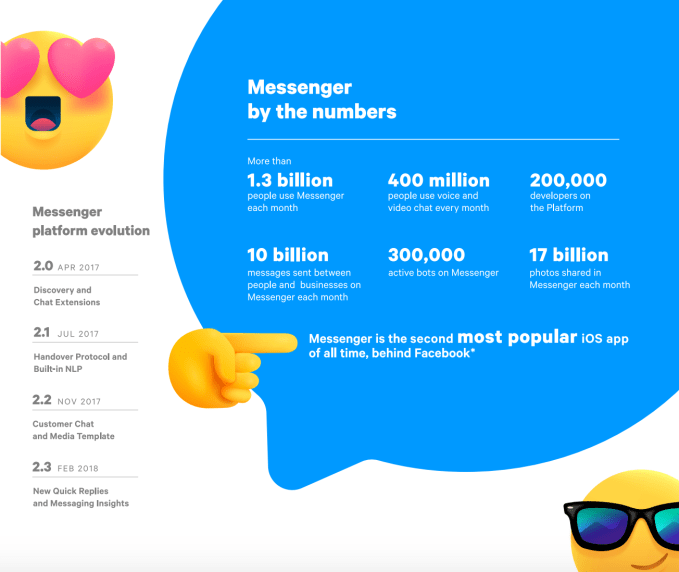
In messaging, Zuckerberg says more photos and links are shared privately than through Feeds. He sees Facebook’s position as strong, saying “we’re leading in most countries” due to the success of WhatsApp and people’s love of its end-to-end encrypted privacy. But that’s mostly in the developing world Android market where people choose their own default messaging app. In the US and other developed nations where iPhones are popular and ared “bundled” with iMessage, Zuckerberg says Apple “is still ahead”.

The “bundled” language harkens back to to antitrust lawsuits against Microsoft for bundling computers with Internet Explorer. With Apple CEO Tim Cook constantly harping on the poor privacy practices of ad-supported companies like Facebook, Zuckerberg might be gunning to draw regulator attention to iMessage.

Facebook is starting to more aggressively monetize Messenger through inbox ads, and its now selling enterprise tools to brands on both Facebook and WhatsApp that let them pay to ping users. But Facebook risks its chat apps seeming annoying or intrusive if it packs in too many ads or allows too much Message spam. Users could stray to status quos like iMessage and Android Messages if it puts monetization above the user experience.

Dominating Snapchat

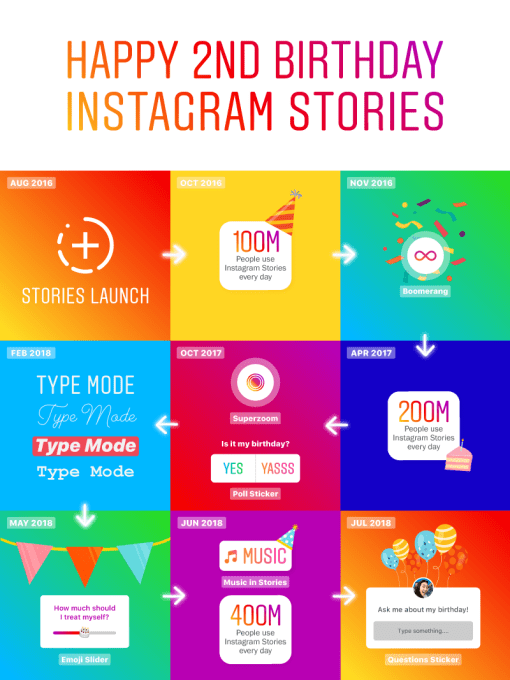
On Stories, Zuckerberg says Facebook is doing even better. Over 1 billion people use its Stories features across Facebook, Messenger, Instagram, and WhatsApp each day, compared to 186 million daily users on Stories inventor Snapchat as a whole. Stories are where the majority of Facebook sharing growth is happening, and Facebook Stories are gaining momentum after a slow and buggy start. That’s why Zuckerberg never mentioned Snapchat, and instead talk about YouTube as its primary competitor in video.

The problem is that creating attractive video ads, especially vertical full-screen ones for Stories, is beyond the capability of the long-tail on small businesses that have fueled Facebook’s News Feed ad revenue. Users often rapidly skip through Stories ads, and Facebook currently doesn’t offer unskippable ones like Snapchat. Many people don’t think to tap or swipe up to visit a link from a Story, or simply don’t want to lose their place in ways that didn’t happen on desktop or even mobile feed ads.

Chasing YouTube

Beyond Stories, Facebook salvaged its after-hours share price by discussing how it plans to show more video, and therefore more of its lucrative video ads. Back in January, Facebook admitted its Q4 user count had declined and revenue might stumble in part because it had decided to show people fewer viral videos that they watch passively. This came as part of its drive for Time Well Spent. But now, Zuckerberg says that Facebook has cracked the code for how to make passive video consumption a positive experience, so Facebook will lift some limits:

People really want to watch a lot of video. To a large degree we’ve had to rate limit its growth, and we need to do the things so we can stop limiting it. The things that have caused us to limit it are on the one hand, when we see passive consumption of video displacing social interactions . . . We needed to figure out a way that video can grow but people can also keep on interacting and doing what they tell us that they uniquely want from Facebook. And now I think we’re starting to work through what the formula is going to be so we can take some of those rate limits off and let video grow at the rate that it wants to. I feel that that’s a very exciting opportunity ahead.”

Across Facebook’s other products, Zuckerberg noted that 800 million people now use Marketplace, its Jobs feature have helped people find 1 million jobs, and its birthday fundraisers have raised $300 million alone this year. But it will be teaching advertisers how to effectively create sponsored messages and Stories ads that will define whether Facebook’s revenue keeps growing.


from Social – TechCrunch https://ift.tt/2AzU8H9
Original Content From: https://techcrunch.com

Zuckerberg says the future is sharing via 100B messages & 1B Stories/day

The News Feed won’t sustain Facebook forever, and that’s scaring investors. Today on Facebook’s earnings call, Mark Zuckerberg stressed that sharing is shifting to private chat, where people send 100 billion messages per day on Facebook’s family of apps, and Stories, where he says people share 1 billion of these slideshows per day (though it’s unclear if that includes third-party apps like Snapchat).

But that means Facebook will have to realign its business towards these mediums where monetization is more complex and it has less experience. The result of Zuckerberg’s comments was a reversal of Facebook’s initial 2 percent share price gain after earnings were announced, dragging it down to a 3.5 percent loss. That was only reversed when Zuckerberg said Facebook would reduce limits on video advertising, pushing shares up 3 percent in after-hours trading.

Facebook’s year-over-year revenue growth has already slowed from 59 percent in Q3 2016, to 49 percent a year ago, to 33 percent now as it hits saturation in developed markets and runs out of News Feed space. Now it will both have to deal with the sharing medium shift, and that the new users it’s adding in the Asia-Pacific and Rest Of World regions earn it 10X less than users in North America.

Battling iMessage

In messaging, Zuckerberg says more photos and links are shared privately than through Feeds. He sees Facebook’s position as strong, saying “we’re leading in most countries” due to the success of WhatsApp and people’s love of its end-to-end encrypted privacy. But that’s mostly in the developing world Android market where people choose their own default messaging app. In the US and other developed nations where iPhones are popular and ared “bundled” with iMessage, Zuckerberg says Apple “is still ahead”.

The “bundled” language harkens back to to antitrust lawsuits against Microsoft for bundling computers with Internet Explorer. With Apple CEO Tim Cook constantly harping on the poor privacy practices of ad-supported companies like Facebook, Zuckerberg might be gunning to draw regulator attention to iMessage.

Facebook is starting to more aggressively monetize Messenger through inbox ads, and its now selling enterprise tools to brands on both Facebook and WhatsApp that let them pay to ping users. But Facebook risks its chat apps seeming annoying or intrusive if it packs in too many ads or allows too much Message spam. Users could stray to status quos like iMessage and Android Messages if it puts monetization above the user experience.

With Snapchat Vanquished, Facebook Competes With YouTube

On Stories, Zuckerberg says Facebook is doing even better. Over 1 billion people use its Stories features across Facebook, Messenger, Instagram, and WhatsApp each day, compared to 186 million daily users on Stories inventor Snapchat as a whole. Stories are where the majority of Facebook sharing growth is happening, and Facebook Stories are gaining momentum after a slow and buggy start. That’s why Zuckerberg never mentioned Snapchat, and instead talk about YouTube as its primary competitor in video.

But beyond Stories, Facebook salvaged its after-hours share price by discussing how it plans to show more video, and therefore more of its lucrative video ads. Back in January, Facebook admitted its Q4 user count had declined and revenue might stumble in part because it had decided to show people fewer viral videos that they watch passively. This came as part of its drive for Time Well Spent. But now, Zuckerberg says that Facebook has cracked the code for how to make passive video consumption a positive experience, so Facebook will lift some limits

The problem is that creating attractive video ads, especially vertical full-screen ones for Stories, is beyond the capability of the long-tail on small businesses that have fueled Facebook’s News Feed ad revenue. Users often rapidly skip through Stories ads, and Facebook currently doesn’t offer unskippable ones like Snapchat. Many people don’t think to tap or swipe up to visit a link from a Story, or simply don’t want to lose their place in ways that didn’t happen on desktop or even mobile feed ads.

Across Facebook’s other products, Zuckerberg noted that 800 million people now use Marketplace, its Jobs feature have helped people find 1 million jobs, and its birthday fundraisers have raised $300 million alone this year. But it will be teaching advertisers how to effectively create sponsored messages and Stories ads that will define whether Facebook’s revenue keeps growing.


from Mobile – TechCrunch https://ift.tt/2AzU8H9
ORIGINAL CONTENT FROM: https://techcrunch.com/

TECH Solutions - Facebook shares climb despite weak Q3 user growth and revenue

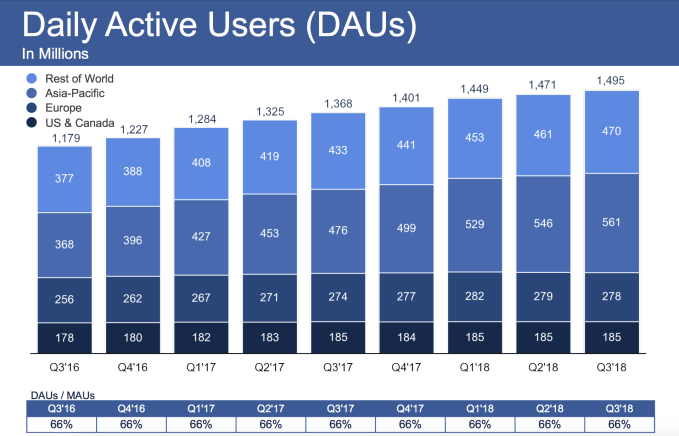
After last quarter’s bloodbath earnings report that cut 20 percent from Facebook’s share price, the social network stumbled in Q3 2018, reaching 2.27 billion monthly users, up 37 million users or 1.79 percent — only slightly better than Q1’s slowest-ever growth rate of just 1.54 percent, and compared to an 2.29 billion Wall Street estimate. It added 24 million daily active users hit 1.49 billion, up 1.36 percent compared to Q1’s 1.44 percent, missing the 1.51 billion estimate.

But the real growth story depends on its core US/Canada and Europe markets where Facebook saw zero growth and lost 1 million monthly users respectively last quarter. In Q3, Facebook added 1 million monthly users to reach 242 million in the US/Canada region, but held flat at 185 million dailies there. It lost 1 million users in Europe in both dailies and monthlies. Those markets make up over 70 percent of its revenue, which is why the slow growth and shrinkage is scaring Wall Street.

As for Facebook’s business, the company earned $13.73 in revenue, compared to Refinitiv’s consensus estimate of $13.78 billion, and saw $1.76 EPS compared to an estimate of $1.47, making for a mixed report. Revenue was up 33 percent year-over-year, but that’s much slower than the 49 percent YOY gain it had a year ago, and the 59 percent it had in Q3 2016. However, the company should be lauded for investing so much to beat back fake news and election interference, and cutting back on viral videos and clickbait that juice engagement but are terrible for user well-being and society,

Facebook blamed foreign exchange headwings for $159 million in Q3, which was the difference between its miss and a beat on revenue. Mobile accounted for 92 percent of Facebook’s ad revenue, up from 91 percent last quarter, so when you think of the social network, be sure you’re not thinking of a desktop website.

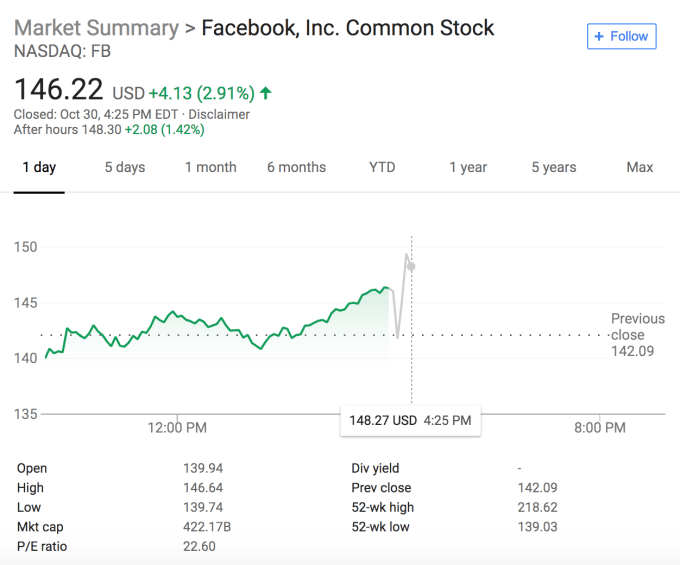
Facebook’s share price closed at $146.22 before earnings were released, still massively down from its $217 peak for before it announced user growth troubles and slowing revenue growth in Q2’s earnings report. Facebook shares climbed 2 percent upon the announcement of earnings, in part thanks to Facebook pulling in $5.14 billion in profit and it adding 1 million users in the North American region after going flat last quarter.

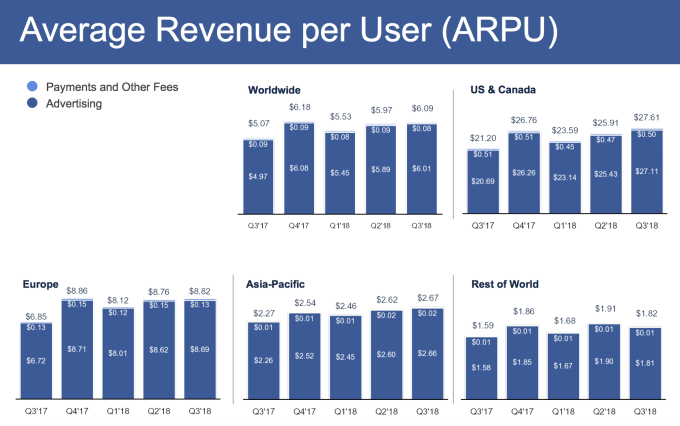
But long-term, Facebook can’t trade growth in its core markets for expansion in Asia-Pacific and the developing world. Facebook average revenue per user worldwide is $6.09, but the regional differences are stark. It rakes in $27.61 per users in the US and Canada, and $8.82 in Europe, but just $2.67 in Asia-Pacific and $1.82 in the Rest Of World region. In fact, ARPU dropped 4 percent in the Rest Of World, indicating users there may be spending fewer minutes per day browsing the News Feed and seeing ads.

Facebook hoped to show that its business can keep growing even as it spent massively to double its security and content moderation team from 10,000 to 20,000 this year. It did note that “more than 2.6 billion people now use Facebook, WhatsApp, Instagram, or Messenger each month” compared to 2.5 billion last quarter. It also revealed another new stat: “more than 2 billion people use at least one of our Family of services every day on average.” The goal of both of these stats is to distract from Facebook’s own slow growth by reminding people that some of those users who leave are going to its other properties.

But still, the company’s revenues and profits have been overshadowed by the non-stop parade of scandals ranging from election interference to its biggest security breach ever. Next quarter we’ll see if the breach scared users away or if Facebook logging them out for safety led some to never log back in.


from Social – TechCrunch https://ift.tt/2AAZXnX
Original Content From: https://techcrunch.com

Google Pixel 3 XL users are getting twice the notch, thanks to a bug

Over the past two years, the notch move from anomaly to fact of life, and no company has proven itself more pro-notch than Google. From its embrace of #notchlife in Android Pie to the downright gigantic one found up top on the Pixel 3 XL, Google’s really notchin’ it up.

In fact, as noted by Android Police the Pixel 3 XL has a notch so nice, Google’s delivering it twice. A number of owners have reported an (admittedly hilariously bug) that’s causing the massive headset to double up on the notch, with a second cutout appear on the side of the device.

Google has acknowledge (acknotchleged?) the issue and noted that it’s working on a fix, which should be coming soon. The company hasn’t offered a reason behind the issue, but it appears to stem from Pie’s built-in notch feature, and likely has something to do with how the background adjusts when the handset changes from portrait to landscape mode.

It seems even in 2018, that’s a notch too far.


from Mobile – TechCrunch https://ift.tt/2qiiaAv
ORIGINAL CONTENT FROM: https://techcrunch.com/

Google’s Gboard now lets you create a set of emoji that look like you

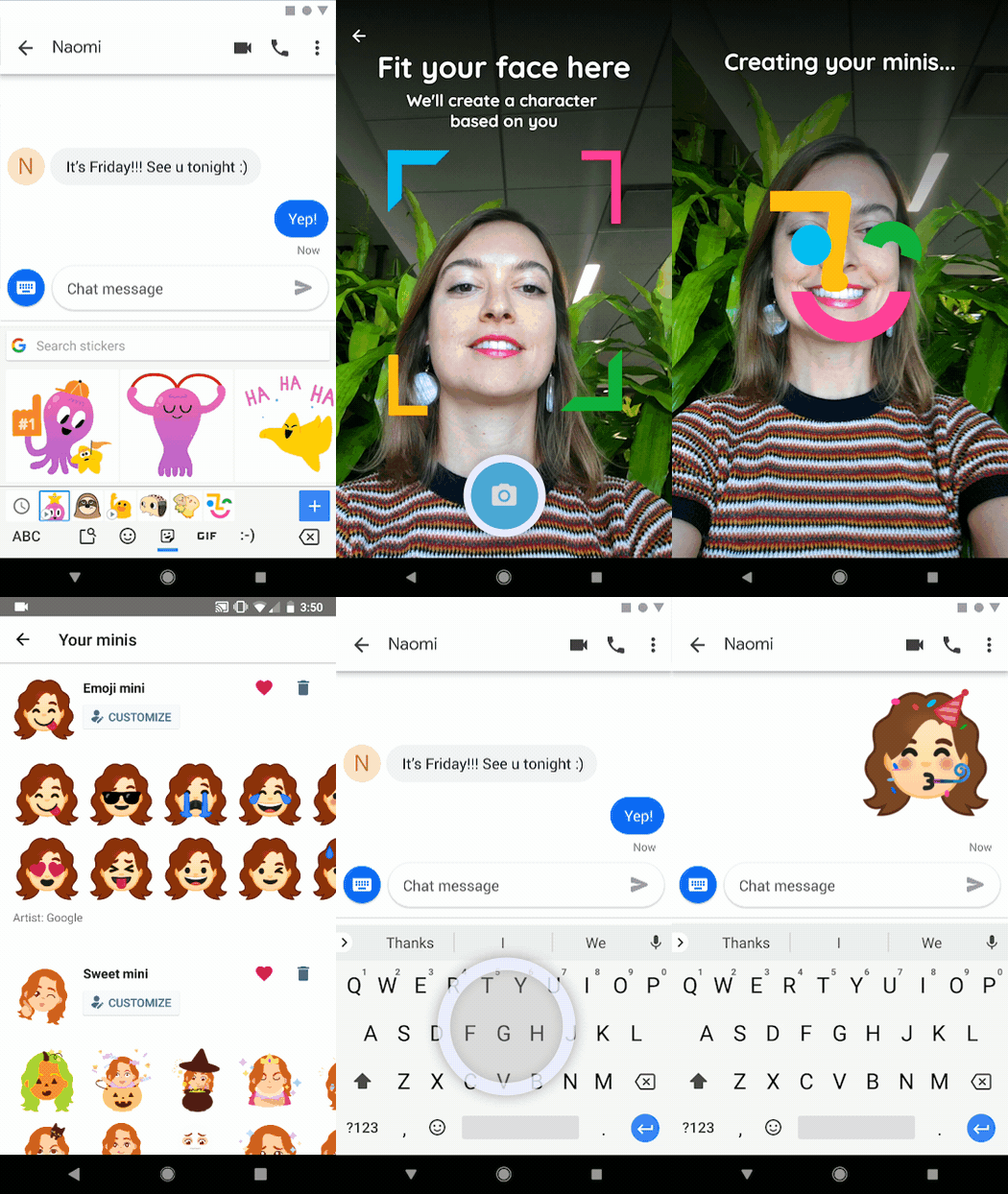
Last summer, Google introduced its own take on Bitmoji with the launch of “Mini” stickers in its keyboard app, Gboard, which leverage machine learning to create illustrated stickers based on your selfie. Today, Google is expanding the Mini Stickers with the launch of what it calls “Emoji Minis” – meaning, emoji-sized stickers that look like you.

Similar to the initial launch of Mini stickers, the new emoji are also created using machine learning techniques, Google says.

The company said the idea is to give people a way to use emoji they feel better represent who they really are.

“Emoji Minis are designed for those who may have stared into the eyes of emoji and not seen yourself staring back,” explained Google, in a blog post. “These sticker versions of the emoji you use every day are customizable so you can make them look just like you.”

That means your emoji can have differently colored hair – like green or blue or gray, for example – or piercings. It can be wearing a hat, head covering, or glasses.

Google says it uses neural networks to suggest skin tones, hairstyles, and accessories that you can then fine tune. You can choose a color for your hair, facial hair, or select different types of head covering and eyewear. You can also add freckles or wrinkles, if you want.

The result is a not just a single emoji, but a selection of options. For example, you can use your custom emoji as a zombie, mage, heart eyes, crying eyes, shruggie, and all the others.

This the third style of Mini stickers, first introduced last year. Already, these stickers come in two other styles – a more expressive “bold” and a nicer “sweet.”

While it may seem like a minor thing, creative emoji – and specifically, personalized emoji – can be a big draw for messaging apps. Apple advertises its clever Animoji and personalized Memoji as flagship features of its newer Face ID-powered phones. Snapchat bought Bitmoji (Bitstrips) to give its users access to more tools for creative expression. Samsung lets you make your own AR emoji that look like you. And people celebrated when the Unicode Consortium diversified to include more skin tones, and added, at long last, redheads.

Gboard, whose app has been downloaded over a billion times on Google Play, has a similar draw, thanks to its selfie-based stickers.

The company says the new Emoji Minis are available in all Gboard languages and countries, on both iOS and Android, starting today.


from Mobile – TechCrunch https://ift.tt/2JrwoYS
ORIGINAL CONTENT FROM: https://techcrunch.com/

Tech Solutions -Test captaincy a burden on Sarfraz - Mohsin Khan

The head of the PCB's new cricket committee said he felt sorry for Sarfraz for having to be wicketkeeper, batsman and captain

from Pakistan news from ESPN Cricinfo.com https://ift.tt/2CQzV1i
Original Content From : https://ift.tt/Ti8aBD

TECH Solutions - Naya Pakistan Housing Programme|12 Cities Added To Naya Pakistan Housing Programme

Naya Pakistan Housing Programme|12 Cities Added To Naya Pakistan Housing Programme
Hi Friends: This is my Blog Technical Solutions created to share videos and content of technical solutions with the world. At this blog you can find videos about Free Search Engine Optimization Course, how to develope Android Applications and What is Computer hardware and software, you would be able to increse your channel views, or boost your website. so guys keep visiting my blog for learning technical things. Thank You!